
Nail guns save contractors, carpenters, roofers, and DIY homeowners a huge amount of time during construction projects in Los Angeles, CA. According to industry reports, power nailers can increase framing productivity by nearly 40% compared to traditional hammering methods. However, frequent exposure to dust, heat, coastal moisture, and job site debris can shorten the life of these tools when users ignore regular upkeep. Proper pneumatic nail gun care and maintenance helps reduce downtime, prevent safety issues, and improve long-term performance. Whether you work in residential construction or commercial remodeling, consistent maintenance keeps your nail gun reliable throughout demanding Los Angeles projects.
Why Nail Gun Maintenance Matters in Los Angeles
Los Angeles has a unique climate that affects power tools differently across neighborhoods and job sites. Coastal areas like Santa Monica and Long Beach often expose tools to salty air and humidity, while inland locations experience dry heat and heavy dust. These conditions can damage seals, corrode metal parts, and clog internal components over time. Therefore, contractors who maintain their nail guns regularly often avoid expensive repairs and replacement costs. Consistent maintenance also helps improve firing accuracy and reduces dangerous nail jams during operation.
Many construction professionals in Los Angeles use nail guns daily for framing, roofing, flooring, siding, and finishing tasks. Because these tools operate under high pressure, small issues can quickly become major mechanical problems. Dirty air hoses, low lubrication, and worn O-rings often reduce tool efficiency without obvious warning signs. In addition, neglected nail guns may misfire or lose power during important projects. A simple maintenance routine can help users avoid unnecessary delays and improve overall productivity.
Clean Your Nail Gun After Every Job
Cleaning a nail gun after each workday remains one of the easiest ways to extend its lifespan. Dust, sawdust, drywall particles, and roofing debris can build up inside the magazine and firing chamber very quickly. Over time, this debris restricts airflow and affects firing consistency. Therefore, users should wipe down the exterior and inspect internal areas regularly. Even a few minutes of cleaning can prevent serious performance issues later.
Use compressed air to remove loose debris from the nail feed system and trigger assembly. Afterward, wipe metal surfaces with a clean microfiber cloth to remove moisture and grime. Contractors working in dusty Los Angeles neighborhoods often notice faster buildup, especially during dry summer months. Consequently, daily cleaning becomes even more important during peak construction seasons. Never store a dirty nail gun because trapped particles can harden overnight and damage moving parts.
Avoid using harsh chemicals or excessive water while cleaning pneumatic nailers. Strong solvents can damage rubber seals and weaken plastic housing materials over time. Instead, use manufacturer-approved cleaners designed specifically for air tools and nail guns. Furthermore, inspect air vents and exhaust ports carefully during each cleaning session. A clean exhaust system allows the tool to maintain proper air pressure during operation.
Lubricate Moving Parts Properly
Lubrication plays a major role in keeping pneumatic nail guns running smoothly in demanding work environments. Internal moving parts generate friction during every firing cycle, especially during high-volume framing jobs. Without proper lubrication, these components wear out much faster and may eventually fail. Therefore, adding air tool oil regularly helps reduce internal stress and improves firing consistency. Most manufacturers recommend lubricating the tool before each use.
Apply a few drops of pneumatic tool oil directly into the air inlet before connecting the hose. This process helps coat internal seals and pistons with protective lubrication during operation. However, avoid over-lubricating because excess oil can attract dust and create sticky buildup inside the firing chamber. Los Angeles contractors working in dry conditions should pay special attention to lubrication frequency. Hot temperatures can dry out internal seals more quickly than cooler climates.
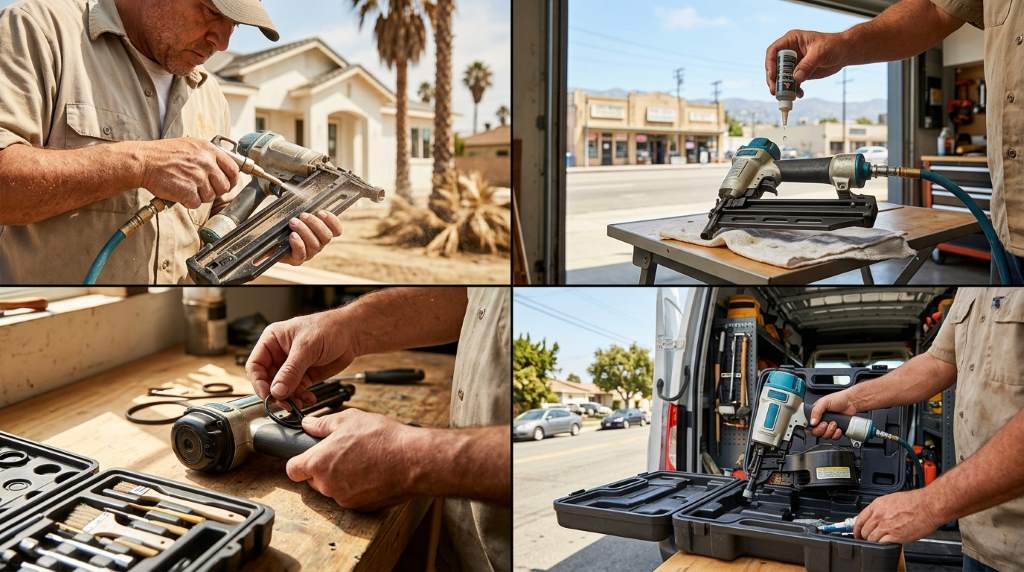
Battery-powered nail guns also require occasional lubrication, although they use different mechanisms than pneumatic models. Always follow the manufacturer’s maintenance instructions for cordless units to avoid damaging sensitive components. In addition, check for oil leaks or unusual residue around the nosepiece and trigger area. These signs may indicate worn seals or internal mechanical issues. Proper lubrication not only improves performance but also helps reduce repair expenses.
Inspect Air Compressors and Hoses Frequently
Many nail gun problems actually begin with the air compressor system rather than the tool itself. Weak airflow, pressure fluctuations, and dirty hoses often reduce firing performance during construction projects. Therefore, inspecting the compressor setup regularly helps maintain consistent operation throughout the day. Contractors in Los Angeles frequently move equipment between job sites, which increases wear on hoses and fittings. Small leaks can eventually lower air pressure and strain the nail gun unnecessarily.
Check hoses for cracks, punctures, or loose fittings before starting work each morning. Damaged hoses not only reduce efficiency but also create serious safety hazards on busy construction sites. In addition, drain moisture from the air compressor tank regularly to prevent rust and water contamination. Coastal humidity near Los Angeles beaches can increase moisture buildup inside compressors significantly. Water entering the nail gun may damage internal parts and cause corrosion over time.
Always use the correct pressure settings recommended by the nail gun manufacturer. Excessive air pressure can crack internal components, while low pressure may cause incomplete nail penetration. Furthermore, clean air filters on the compressor to ensure unrestricted airflow during operation. Dirty filters force the compressor to work harder and reduce overall system efficiency. A properly maintained compressor system directly supports reliable nail gun performance.
Store Nail Guns the Right Way
Proper storage protects nail guns from unnecessary damage between projects and during transportation. Many contractors leave tools exposed inside trucks or garages where heat, dust, and moisture slowly affect performance. Los Angeles temperatures can rise significantly during summer months, especially inside parked vehicles. Therefore, storing nail guns in protective cases helps prevent environmental damage and accidental impacts. Organized storage also reduces the risk of lost accessories and spare parts.
Keep nail guns in a cool, dry location whenever possible to protect seals and electronic components. Moisture exposure may lead to rust formation on metal parts and connectors. In addition, remove nails from the magazine before storing the tool to reduce internal spring tension. This simple habit helps preserve feeding mechanisms during long periods of inactivity. Always disconnect the air supply before placing the tool into storage.
Contractors who frequently travel across Los Angeles should invest in durable carrying cases with padded interiors. Heavy traffic and constant movement between job sites can expose tools to vibration and impact damage. Consequently, protective storage becomes essential for maintaining long-term reliability. Label storage compartments clearly to keep maintenance supplies organized and accessible. Proper storage habits help minimize unexpected equipment failures.
Prevent Nail Jams Before They Happen
Nail jams remain one of the most common problems affecting nail gun performance and job site productivity. Most jams occur because users load incorrect fasteners or ignore worn internal components. Therefore, understanding the root causes of jamming helps prevent interruptions during construction work. Using high-quality nails designed specifically for the tool model improves feeding consistency significantly. Cheap or damaged fasteners often bend inside the magazine and create blockages.
Inspect the nail magazine regularly for dirt buildup, bent rails, or loose fastener guides. Even small alignment issues can affect nail movement during firing cycles. Additionally, avoid mixing different nail sizes or brands inside the same magazine. Inconsistent fastener dimensions often increase the likelihood of jamming problems. Los Angeles contractors working under tight project deadlines should keep spare fasteners readily available to avoid using damaged nails.
If a jam occurs, disconnect the air supply immediately before attempting any repairs. Carefully remove stuck nails using the manufacturer’s recommended procedure and proper safety gear. Never force nails out with excessive pressure because this may damage internal components. Furthermore, inspect the driver blade after clearing the jam to ensure it remains straight and undamaged. Regular inspection and careful loading habits reduce the frequency of frustrating nail jams.
Replace Worn Parts Before Failure Occurs
Every nail gun contains moving parts that naturally wear down after repeated use on construction projects. O-rings, seals, springs, bumpers, and driver blades eventually lose effectiveness over time. Therefore, replacing worn components early helps prevent larger mechanical failures and costly downtime. Many Los Angeles contractors wait until tools stop working completely before performing repairs. However, preventive maintenance saves both money and project time in the long run.
Watch for warning signs like weak firing power, air leaks, inconsistent nail depth, or unusual sounds during operation. These symptoms often indicate aging internal parts that need replacement soon. In addition, inspect rubber seals for cracks or hardening caused by heat exposure. Southern California temperatures can accelerate seal deterioration in poorly stored tools. Replacing inexpensive seals early often prevents expensive internal damage later.
Always use manufacturer-approved replacement parts to maintain proper performance and safety standards. Generic components may not fit correctly and can affect firing accuracy. Furthermore, keep basic repair kits available for quick maintenance during busy projects. Contractors who handle routine part replacements themselves often reduce equipment downtime significantly. Proactive repairs help nail guns remain dependable throughout demanding workloads.
Protect Nail Guns From Dust and Construction Debris
Construction sites across Los Angeles generate large amounts of dust from concrete cutting, drywall sanding, and demolition work. Fine particles can easily enter nail guns and damage sensitive internal components over time. Therefore, protecting tools from airborne debris should remain a top maintenance priority. Dust accumulation often causes airflow restrictions and inconsistent firing performance. Workers in dry inland areas usually experience even heavier dust exposure during summer months.
Use protective covers or sealed toolboxes whenever the nail gun remains idle on a job site. Additionally, avoid placing tools directly on dusty floors or concrete surfaces during breaks. Elevated storage helps reduce exposure to dirt and moisture. Contractors should also clean air compressor filters regularly because dirty filters circulate contaminated air through pneumatic tools. Cleaner airflow significantly improves long-term reliability.
When working in especially dusty environments, increase cleaning frequency throughout the workday. Quick inspections between tasks can help identify buildup before it becomes severe. Moreover, consider using inline air filters to reduce moisture and particle contamination entering the nail gun. These small accessories provide valuable protection during large-scale construction projects. Consistent dust control practices extend tool life considerably.
Related:
How to Find Affordable Gardening Tools Without Compromise
Cordless Oscillating Multi-Tools: Your Secret Weapon for Tricky Renovation Spots
Monitor Trigger and Safety Mechanisms
The trigger system and contact safety tip play critical roles in nail gun performance and workplace safety. Worn or malfunctioning safety mechanisms increase the risk of accidental discharge and injuries. Therefore, users should inspect these components before every shift. Loose triggers, sticky contact tips, or delayed firing responses often indicate maintenance issues that require immediate attention. Ignoring these warning signs can create dangerous working conditions.
Test the contact safety mechanism on scrap material before beginning actual construction work. The tool should fire only when the nosepiece presses firmly against the surface, and the trigger activates properly. Additionally, inspect springs and pivot points for dirt buildup or visible wear. Los Angeles construction crews often use nail guns intensively during framing and roofing jobs, which increases mechanical stress on safety systems. Frequent inspection helps ensure reliable operation under demanding conditions.
Never disable or modify factory-installed safety features to increase speed or convenience. Tampering with these systems may violate workplace safety regulations and increase accident risks. Furthermore, train all workers on proper handling procedures and maintenance practices. Even experienced contractors benefit from routine safety reminders and equipment inspections. Safe operating habits protect both workers and expensive equipment.
Use the Correct Nails for Each Application
Using the wrong fasteners creates unnecessary stress on nail gun components and reduces overall efficiency. Different nail guns require specific nail lengths, gauges, and collation angles for proper operation. Therefore, always confirm compatibility before loading fasteners into the magazine. Incorrect nails may jam, misfire, or damage the feeding mechanism during use. Many avoidable maintenance issues result directly from improper fastener selection.
Los Angeles contractors often switch between framing, roofing, finishing, and siding applications throughout the workweek. Each task requires specialized fasteners designed for different materials and structural requirements. Consequently, keeping organized nail inventories helps prevent loading mistakes on busy job sites. Store fasteners in labeled containers to reduce confusion during fast-paced projects. Proper organization also minimizes wasted time searching for supplies.
Avoid using rusty, bent, or low-quality nails because they increase internal wear and feeding problems. Cheap fasteners may also break apart during firing and damage internal components. In addition, inspect nail strips for moisture exposure before use. Humidity and improper storage can weaken adhesive collation materials over time. High-quality fasteners improve both tool performance and project results.
Schedule Professional Servicing Annually
Even well-maintained nail guns benefit from professional inspection and servicing at least once per year. Certified technicians can identify hidden wear, pressure issues, and alignment problems that users may overlook during routine maintenance. Therefore, annual servicing helps prevent unexpected breakdowns during critical projects. Many repair shops in Los Angeles specialize in pneumatic and cordless construction tools. Professional maintenance often extends equipment lifespan significantly.
Technicians typically inspect internal seals, replace worn components, and calibrate firing systems for optimal performance. Additionally, they clean hard-to-reach areas that accumulate debris over time. Contractors who rely heavily on nail guns for daily work should consider more frequent servicing intervals. High-volume commercial projects place substantial stress on internal mechanisms. Preventive servicing reduces the likelihood of expensive emergency repairs later.
Keep maintenance records for each nail gun to track repair history and servicing schedules accurately. Organized records help identify recurring issues and determine when replacement becomes more cost-effective than repairs. Furthermore, documented maintenance may support warranty claims if problems arise unexpectedly. Professional servicing complements regular cleaning and lubrication routines very effectively. Combining both approaches provides the best long-term results.
Best Practices for Cordless Nail Guns
Cordless nail guns have become increasingly popular among Los Angeles contractors because they eliminate air hoses and improve mobility. However, battery-powered models require different maintenance practices than pneumatic tools. Proper battery care directly affects firing performance, runtime, and overall tool lifespan. Therefore, users should follow manufacturer charging guidelines carefully. Neglecting battery maintenance may reduce productivity on demanding job sites.
Store batteries in moderate temperatures rather than leaving them inside hot vehicles or direct sunlight. Extreme heat can shorten battery lifespan and reduce charging efficiency significantly. In addition, clean battery terminals regularly to maintain strong electrical connections. Dust and corrosion may interfere with power transfer during operation. Contractors working outdoors in Southern California should pay close attention to heat exposure during summer projects.
Avoid fully draining lithium-ion batteries before recharging whenever possible. Partial charging habits often help preserve long-term battery health more effectively. Furthermore, inspect cordless nail guns for software updates if the manufacturer provides smart diagnostic features. Some modern tools include performance monitoring systems that help identify maintenance needs early. Proper battery care keeps cordless nail guns reliable and efficient.
Common Mistakes That Damage Nail Guns
Many nail gun failures result from avoidable user mistakes rather than manufacturing defects. Understanding these common errors helps contractors protect their investment and maintain consistent performance. One frequent mistake involves using incorrect air pressure settings during operation. Excessive pressure places unnecessary stress on seals, pistons, and firing mechanisms. Always follow manufacturer recommendations for safe operating ranges.
Another common issue occurs when users skip lubrication or apply the wrong type of oil. Automotive oils and household lubricants may damage internal rubber components over time. Additionally, some workers continue using tools after noticing unusual sounds or weak firing performance. Ignoring early warning signs often leads to larger mechanical failures later. Quick inspection and maintenance usually prevent more serious damage.
Improper storage also contributes significantly to premature wear and corrosion problems. Leaving nail guns exposed to rain, dust, or direct sunlight gradually weakens internal parts and external finishes. Furthermore, careless transportation between Los Angeles job sites may expose tools to unnecessary impacts. Protective storage and careful handling practices improve durability considerably. Avoiding these mistakes helps maximize equipment lifespan and reliability.
Benefits of Regular Nail Gun Maintenance
Routine maintenance provides both short-term and long-term benefits for construction professionals and homeowners alike. Properly maintained nail guns operate more smoothly, fire more accurately, and experience fewer unexpected breakdowns. Therefore, users can complete projects faster with less frustration and downtime. Reliable equipment also improves overall workplace safety by reducing misfires and mechanical malfunctions. Consistent performance helps crews maintain productivity on tight schedules.
Regular maintenance also lowers operating costs over time by reducing repair expenses and extending equipment lifespan. Contractors who care for their tools properly often delay costly replacements for several years. In addition, efficient nail guns consume air and battery power more effectively during operation. Better efficiency reduces strain on compressors and charging systems alike. Small maintenance habits create meaningful financial savings over time.
Clients also notice the difference when contractors use clean, dependable equipment on professional job sites. Reliable tools contribute to smoother workflows and higher-quality construction results. Furthermore, organized maintenance routines reflect professionalism and attention to detail. These qualities help build trust with customers and project managers. Investing time in maintenance ultimately supports long-term business success.
Conclusion
Keeping nail guns working smoothly in Los Angeles, CA requires consistent maintenance, smart storage habits, and careful daily operation. The region’s heat, dust, coastal moisture, and demanding construction conditions can quickly affect tool performance when users ignore preventive care. However, regular cleaning, proper lubrication, correct fastener selection, and annual servicing help extend equipment lifespan significantly. Contractors and homeowners who follow these maintenance practices often experience fewer breakdowns, safer job sites, and lower repair costs. Start implementing these pro tips today to protect your nail guns, improve productivity, and keep every project running efficiently.
FAQs
How often should I oil a pneumatic nail gun?
You should add a few drops of pneumatic tool oil before each use unless the manufacturer states otherwise.
Why does my nail gun keep jamming?
Incorrect fasteners, dirt buildup, or worn internal components usually cause repeated nail jams.
Can Los Angeles weather damage nail guns?
Yes, coastal moisture, heat, and dust in Los Angeles can corrode parts and reduce tool performance over time.
Should I clean my nail gun every day?
Yes, daily cleaning helps remove dust and debris that may damage internal components.
When should I replace nail gun O-rings?
Replace O-rings when you notice air leaks, weak firing power, or visible cracking on the seals.