The best budget home upgrades are fresh paint, better curb appeal, updated lighting, and small kitchen and bathroom refreshes. These projects cost little, yet they change how buyers feel about your home. They also help your home stand out in a crowded market.
You do not need a large budget to add value. Smart, simple updates often beat big renovations. Buyers notice clean, bright, well-kept homes first.
This guide shows which upgrades give the best return. It also explains how to plan them, avoid common mistakes, and spend wisely.
Why Small Upgrades Add Real Value
Small upgrades add value because they change first impressions. Buyers decide quickly whether a home feels cared for. A fresh look tells them the house has been looked after.
Small projects also lower the risk in a buyer’s mind. A buyer who sees peeling paint may wonder what else needs fixing. On the other hand, a tidy home feels safe and ready to move into.
Value also depends on your local market. Look at similar homes near you before you spend. Local real estate agents can tell you what buyers in your area want most.
Focus on Return, Not Just Cost
A cheap project is not always a smart one. Choose upgrades that fix visible problems or improve daily comfort. For example, a new front door handle costs little and looks great. A pricey fountain may not add anything.
Start With a Fresh Coat of Paint
Fresh paint is one of the most affordable ways to lift a home’s appeal. It hides scuffs, brightens rooms, and makes spaces feel clean. Most people can paint a room in a weekend.
Choose soft, neutral colors such as warm white, light gray, or beige. Neutral tones help buyers picture their own furniture in the space. Bold colors, however, can limit your audience.
Focus on the rooms buyers notice most. These include the living room, the kitchen, and the main bedroom. Don’t forget the trim, doors, and ceilings, because worn edges spoil a fresh look.
Transforming Your Home’s Curb Appeal
First impressions are formed in seconds, making exterior curb appeal one of the highest-yield, lowest-cost investments you can make to elevate your home’s perceived market value. Elevating your property’s street presence begins with fundamental maintenance manicuring the lawn, sculpting overgrown hedges, and clearing weeds to establish a crisp baseline, complemented by a fresh layer of dark mulch and strategically placed entry flora. To anchor the look with a polished focal point, revitalize your entrance with a bold new coat of front door paint, paired with modern metallic house numbers, a minimalist mailbox, and a refined welcome mat. If you are tailoring these high-impact enhancements for a temporary space, discover non-permanent styling strategies in our guide on plan a renter-friendly makeover on a budget.
Clean and Repair Exterior Surfaces
Pressure washing removes dirt from walls, driveways, and walkways. It costs little and can change the whole look of a home. Repair cracked paths and loose fence boards at the same time.
Also check your roof and gutters. Missing shingles or sagging gutters worry buyers. Small repairs now can prevent bigger bills later.
Update Lighting and Hardware
Better lighting makes rooms feel larger and more welcoming. Swap old, yellow fixtures for modern ones. Choose bulbs with a warm, bright glow.
Add lighting where it helps most. Good options include entryways, hallways, and kitchens. Outdoor lights near the door also add safety and style.
Hardware is another quick win. Replace worn cabinet knobs, drawer pulls, and door handles. This small change makes old cabinets and doors look new. It also takes only a few hours.
Refresh the Kitchen Without a Full Remodel
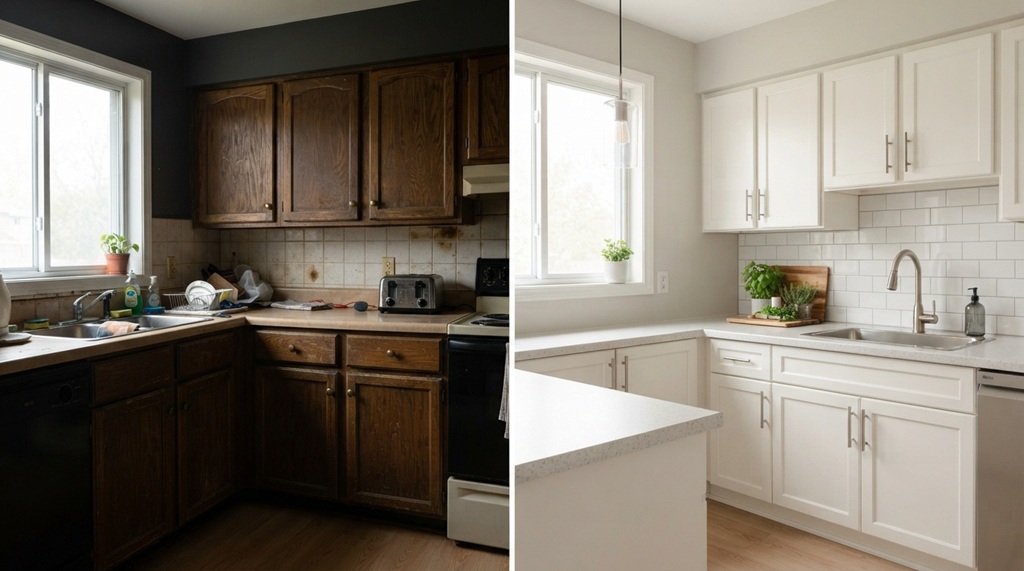
A full kitchen remodel is costly. However, a light refresh can give you many of the same benefits. Buyers care about kitchens, so small updates matter here.
Begin with cabinets. Painting them or changing the hardware costs far less than replacing them. Next, deep clean the appliances, grout, and sink.
Then consider small upgrades:
- A new faucet
- A stylish backsplash using peel-and-stick tiles
- Brighter light fixtures
- A fresh coat of paint on the walls
Keep the changes simple and neutral. A clean, bright kitchen appeals to almost every buyer.
Modernize the Bathrooms on a Budget
Bathrooms are small, so modest updates go a long way. Start by re-caulking the tub and sink. Clean or replace old grout, since fresh lines make the whole room look cleaner.
After that, swap out dated items. New faucets, a modern showerhead, and a fresh mirror can change the mood. A new toilet seat and clean towels also help.
If the vanity looks tired, paint it or replace the hardware. In short, aim for a clean, fresh, spa-like feel. Avoid complex projects that need a plumber unless a repair is truly needed.
Improve Energy Efficiency
Energy-saving upgrades appeal to buyers who want lower bills. Many of these projects are simple and inexpensive. Moreover, they make the home more comfortable.
Start with sealing air leaks. Weatherstripping around doors and caulk around windows keep out drafts. Adding insulation in the attic can also help keep your home warm or cool.
You can also switch to LED bulbs and install a smart thermostat. These changes cost little and show buyers that the home is efficient. Check for local rebates, since some areas offer discounts on energy upgrades.
Declutter, Clean, and Stage

Decluttering costs almost nothing, yet it makes a big difference. Empty, tidy spaces look larger. Buyers can then focus on the home, not your belongings.
Clear counters, shelves, and closets. Store extra furniture and personal photos. Afterward, clean every room from top to bottom, including windows and floors.
Simple staging also helps. Arrange furniture to show how each room works. Add a few plants, fresh flowers, or soft pillows for warmth. Keep it simple and avoid crowding the space.
Which Upgrades to Skip
Some projects cost more than they return. Avoid highly personal choices, such as bold wallpaper or unusual tile. These may not match a buyer’s taste.
Also think twice about big projects like pools or major additions. They cost a lot and appeal to fewer people. Instead, put your money into repairs and simple updates first.
Finally, do not ignore basic maintenance. A leaking pipe or a broken window hurts value more than a missing luxury feature. Fix real problems before you decorate.
Frequently Asked Questions
Which budget upgrade adds the most value?
Fresh paint and better curb appeal usually give the best return for the lowest cost. They improve how the home looks in photos and in person. Both projects are easy to finish in a short time.
How much should I spend on home upgrades?
Spend only what the local market supports. A good rule is to compare your home with similar ones nearby. If a project costs more than it can add, skip it.
Should I do the work myself or hire a pro?
Simple jobs like painting, cleaning, and changing hardware suit most homeowners. Electrical, plumbing, and roof repairs need a licensed professional. Hiring an expert for these jobs keeps your home safe and up to code.
Do small upgrades help a home sell faster?
Yes, they often do. A clean, updated home looks ready to move into, which attracts more buyers. It also makes a strong first impression in listing photos.
Conclusion
You do not need a big budget to raise your home’s value. Fresh paint, better curb appeal, updated lighting, and small kitchen and bathroom refreshes all make a real difference. Energy-saving fixes and good staging add even more appeal.
Start with a simple walk-through of your home. Write down the most visible problems, then fix those first. Small, smart steps will help your property look better and sell for more.