
Gardening is one of life’s most satisfying hobbies. There is something deeply rewarding about growing your own plants, flowers, and vegetables. However, walking into a garden center can feel overwhelming when you see the price tags. High-end tools can cost a surprising amount of money. This leads many people to wonder whether they can enjoy gardening without breaking the bank.
The answer is a firm yes. You do not need the most expensive gear to grow a thriving garden. With the right knowledge and a little patience, you can find budget garden tools that perform just as well for most everyday tasks. This guide will show you how to shop smart, what features to prioritize, and where to find great deals. Therefore, you can spend more time in the soil and less time worrying about your wallet.
Why Quality Still Matters Even on a Budget
Before diving into where to find deals, it is important to understand one key point. There is a difference between affordable and cheap. Affordable tools offer solid performance at a reasonable price. Truly cheap tools, however, can break quickly, cause blisters, and make your gardening experience frustrating.
Therefore, the goal is not to spend as little as possible. The goal is to get the best value for your money. A mid-range trowel that lasts five years is far better value than a flimsy one you replace every season. Additionally, poor-quality tools can make tasks harder, not easier. A dull, bendy hoe requires far more effort to use than a well-made one.
So as you shop, keep quality in mind. Look for tools with solid construction, comfortable handles, and good materials. These features do not always require a premium price. You just need to know where to look and what to look for.
Essential Tools Every Gardener Actually Needs
One of the best ways to save money is to avoid buying tools you do not need. Many beginners purchase a full starter kit and then discover they use only three or four items regularly. Additionally, specialty tools that promise to revolutionize your garden often collect dust in the shed.
Start with the true essentials. These are the tools that cover the vast majority of gardening tasks:
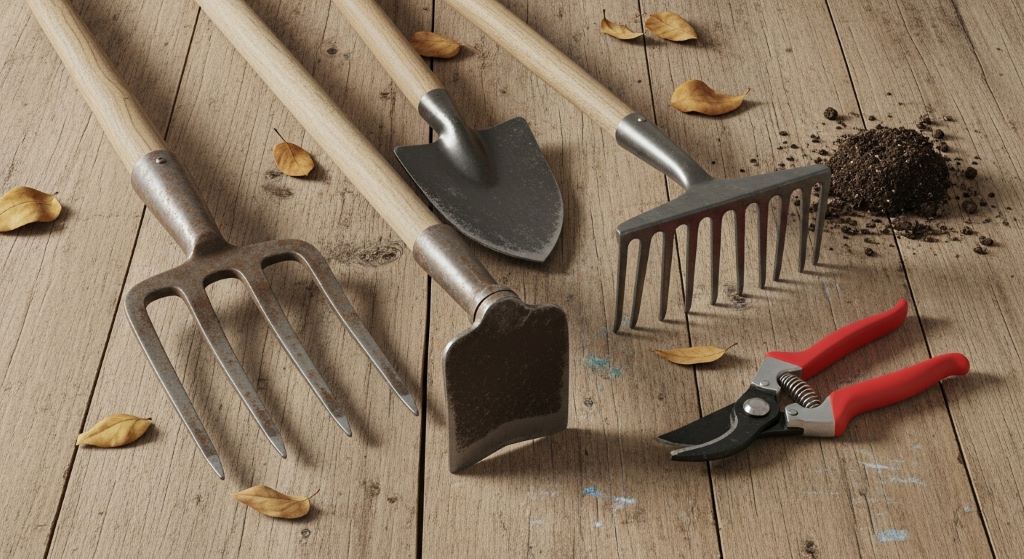
- A hand trowel for planting, transplanting, and digging small holes
- A garden fork or hand cultivator for loosening soil and removing weeds
- A hoe for breaking up compacted soil and clearing weeds in rows
- A garden rake for leveling soil and gathering leaves and debris
- A pair of pruning shears for trimming plants, shrubs, and small branches
- A watering can or garden hose with an adjustable nozzle
Once you have these six items, you can handle most common gardening jobs. Build from there only when you identify a genuine need. This approach saves money and keeps your shed organized.
What to Look for in Tool Construction
Understanding construction quality helps you spot a good deal instantly. Even among cheap gardening equipment, some products are built far better than others. Knowing what to examine gives you a real advantage as a shopper.
Blade and Head Materials
Stainless steel is a great choice for tool heads. It resists rust, stays sharp longer, and cleans up easily. Carbon steel is another strong option. It is slightly more prone to rust, but it is often less expensive and still very durable with proper care. Avoid tools with thin or hollow metal heads. These bend and break under pressure, especially in heavy clay soil.
Handle Materials
Handles come in wood, fiberglass, and plastic. Each has pros and cons. Wooden handles, especially ash or hickory, are traditional and comfortable to grip. However, they can crack if left out in the rain. Fiberglass handles are extremely durable and weather-resistant. They are also lightweight. Plastic handles are the least expensive option but tend to break under heavy stress.
Therefore, if budget is your priority, look for fiberglass-handled tools. They offer an excellent balance of affordability and longevity. Additionally, check that handles are smooth and splinter-free, especially on wooden options.
Connection Points
The weakest part of most tools is where the head meets the handle. Look for a solid socket connection, where the metal wraps around the handle. Avoid tools where the metal simply sits on top of the handle and is held by a screw. These connections break quickly under load. A solid socket or welded connection is a sign of better construction, even in budget-friendly tools.
Where to Find Affordable Gardening Tools
Now that you know what to look for, the next step is knowing where to shop. The right shopping strategy can save you a significant amount of money without sacrificing quality.
Discount and Outlet Stores
Hardware discount stores and home improvement outlets often carry solid garden tools at lower prices than specialty garden centers. They buy in bulk, which allows them to pass savings along to customers. Additionally, outlet stores for major tool brands sometimes sell factory-second items at a fraction of the regular price. These items may have minor cosmetic flaws but are otherwise fully functional.
Online Marketplaces
Online shopping opens up a world of options. Sites like Amazon carry thousands of garden tool listings with detailed customer reviews. Take time to read those reviews carefully. Look for mentions of durability and how the tools hold up after months of use. Additionally, filter by rating to avoid poorly made products. Many lesser-known brands offer excellent quality at very competitive prices.
Furthermore, watch for flash sales and seasonal discounts. Online retailers tend to discount garden tools heavily at the end of the growing season. Buying in autumn for the following spring is a smart strategy.
Secondhand Markets and Thrift Stores
This is one of the most overlooked sources for excellent garden tools. Estate sales, garage sales, and thrift stores frequently stock vintage hand tools that are built to last. Older tools were often made with higher-grade steel than many modern budget options. A bit of rust on an old trowel or fork is not a problem. With a wire brush, some sandpaper, and a touch of oil, you can restore an old tool to full working order.
Additionally, online classifieds like Facebook Marketplace and Craigslist are rich sources of secondhand tools. Many people sell entire garden sets after moving or downsizing. Therefore, you can sometimes acquire a full collection for the price of one new item.
End-of-Season Sales
Retailers need to clear seasonal inventory before winter. This creates one of the best opportunities of the year to buy budget garden tools at steep discounts. Major garden centers and hardware stores typically begin clearance sales in late summer and early autumn. Discounts of 40 to 70 percent are not uncommon. Therefore, planning your purchases around these sales cycles is a highly effective strategy.
Tool Libraries and Community Sharing
Some communities offer tool-lending libraries where residents can borrow garden equipment for free or a small fee. This is an excellent option if you only need a specific tool occasionally. For instance, a post-hole digger or a heavy-duty cultivator might be needed just once or twice a year. Borrowing instead of buying makes excellent financial sense in those cases.
Smart Buying Strategies to Stretch Your Budget
Beyond knowing where to shop, a few smart habits can help you consistently get more value from every purchase.
Buy one good tool at a time. Rather than purchasing a full set all at once, invest in one quality item per month. This allows you to spread the cost and also lets you evaluate each tool before committing to the rest of a collection.
Read the return policy before you buy. A good return window protects you if a tool turns out to be poorly made. This is especially important when buying online, where you cannot hold the item before purchasing.
Compare prices across at least three sources. Prices for the same product can vary enormously between retailers. A few minutes of comparison shopping can save you a meaningful amount. Use price-comparison websites or browser extensions to automate this process.
Consider sets carefully. Bundled tool sets often look like great value. However, they sometimes include items you will never use. Calculate the cost per useful tool before deciding if the set is actually a better deal than buying individual items.
How to Make Your Tools Last Longer
Proper care dramatically extends the life of any tool, regardless of price. Taking a few minutes after each gardening session to maintain your tools is one of the best investments of your time.
- Clean tools after every use. Remove soil with a stiff brush or damp cloth. This prevents moisture from sitting against the metal and causing rust.
- Dry tools before storing them. Moisture is the biggest enemy of metal tools. Always dry tools completely before putting them away.
- Oil metal parts occasionally. A light coat of linseed oil or machine oil on metal heads prevents rust. Additionally, applying oil to wooden handles prevents them from drying out and cracking.
- Sharpen blades regularly. A sharp hoe and pruning shears make tasks easier and faster. Use a whetstone or a simple hand file to keep edges in good condition.
- Store tools properly. Hang tools on a wall rack or stand them upright in a dry shed or garage. Leaving tools lying on a damp ground accelerates deterioration significantly.
Following these habits will stretch the life of even modest cheap gardening equipment and ensure you get full value from every purchase.
Mistakes to Avoid When Shopping for Budget Garden Tools
Even experienced gardeners make avoidable mistakes when trying to save money on tools. Here are the most common pitfalls and how to steer clear of them.
Buying based on price alone is the most frequent mistake. The least expensive option is not always the best value. A trowel that costs three dollars but breaks after two uses is more expensive in the long run than one that costs twelve dollars and lasts a decade.
Overlooking ergonomics is another common error. A tool that does not fit your hand comfortably will cause fatigue and even injury over time. Therefore, when possible, hold tools before buying them. Check for a comfortable grip and appropriate weight.
Purchasing tools for tasks you rarely do is also a budget drain. As mentioned earlier, start with essentials and expand only when a real need arises. Specialty tools for infrequent tasks are often better borrowed than bought.
Finally, ignoring warranties is a missed opportunity. Even some affordable tools come with manufacturer warranties. A one-year or two-year warranty provides meaningful protection on your investment. Always check for this before purchasing.
Brands Worth Considering for Value
While brand names are not everything, some manufacturers consistently deliver reliable tools at reasonable prices. Brands like Fiskars, Radius Garden, and True Temper are well-regarded for producing durable tools at mid-range prices. Additionally, own-label tools from large hardware chains are often manufactured to decent standards and sold at a significant discount compared to premium brands.
However, do not dismiss lesser-known brands entirely. Many smaller companies produce excellent tools sourced from the same factories as major brands. The difference is simply the marketing budget. Reading independent reviews and focusing on customer feedback helps you find these hidden gems.
Conclusion
Finding affordable gardening tools that perform well is entirely within reach for any gardener. The key is approaching your purchases with knowledge and intention. Start with only the tools you truly need. Focus on construction quality rather than brand names or flashy features. Shop in the right places, including discount stores, online marketplaces, secondhand sources, and end-of-season sales.
Additionally, take care of what you buy. Proper maintenance multiplies the value of any tool, affordable or otherwise. Avoid common mistakes like buying purely on price or accumulating tools you rarely use.
Gardening is about joy, not expense. With the right strategy, you can build an excellent toolkit without overspending. The garden rewards patience and care, and so does smart shopping. Now go find those tools and get growing.
Frequently Asked Questions
1. What are the most important gardening tools for a beginner on a tight budget?
A beginner needs only a handful of tools to get started. A hand trowel, a garden fork, a hoe, and a pair of pruning shears will cover the vast majority of everyday tasks. Additionally, a basic watering can or hose completes a functional starter set. Focus on these before buying anything else.
2. Is it worth buying secondhand gardening tools?
Absolutely. Older tools were often made with higher-grade materials than many modern budget options. Minor surface rust is not a concern. A quick clean and light oiling can restore most secondhand tools to excellent working condition. Estate sales, thrift stores, and online classifieds are great places to find them.
3. How do I know if an affordable tool is actually good quality?
Check the construction carefully. Look for solid metal heads made from stainless or carbon steel, secure handle-to-head connections, and smooth, splinter-free handles. Additionally, read customer reviews that mention long-term durability. Reviews from verified buyers who have used tools for more than six months are especially helpful.
4. When is the best time of year to buy garden tools at a discount?
Late summer and early autumn are the best times to shop. Retailers begin clearing seasonal inventory before winter and offer significant markdowns. Additionally, post-holiday sales in January sometimes include gardening products as stores reset their floor plans. Signing up for newsletters from garden retailers is a good way to get notified of these sales.
5. Can I find good budget garden tools online without trying them first?
Yes, with the right approach. Read product descriptions carefully and look for specifications on materials and construction. Focus on customer reviews that are detailed and mention real-world use. Additionally, choose sellers with a generous return policy so you can return items that do not meet your expectations. Buying from a reputable online retailer also reduces the risk of receiving poor-quality goods.
Related Topics:
The Modern Gardener’s Almanac Planting Guide: Timeless Tips for Today
How to Build a DIY Greenhouse from Recycled Materials