Your mattress is one of the most used surfaces in your home. You spend roughly a third of your life on it. Yet most people never think about what lives inside it. Dust mites, dead skin cells, pet dander, and allergens build up over time. They hide deep within the fabric where a regular vacuum cannot reach.
That is why a dedicated mattress vacuum matters. It is one of the most effective cleaning tools for home hygiene that many households overlook. This guide will help you understand what to look for, what to avoid, and how to make the right choice for your needs.
Why Your Mattress Needs More Than a Regular Clean
Most people change their bed sheets weekly. However, changing sheets alone does not clean the mattress underneath. Allergens and microscopic organisms settle into the layers of your mattress and stay there for months.
Dust mites are the biggest concern. They feed on dead skin and thrive in warm, humid environments — exactly the conditions inside your mattress. A single mattress can harbor millions of dust mites. For people with asthma or allergies, this is a serious problem.
Additionally, sweat, body oils, and moisture seep into the mattress over time. These create an environment where bacteria and mold can grow. Regular bed hygiene practices, including vacuuming your mattress, help prevent this buildup from getting out of control.
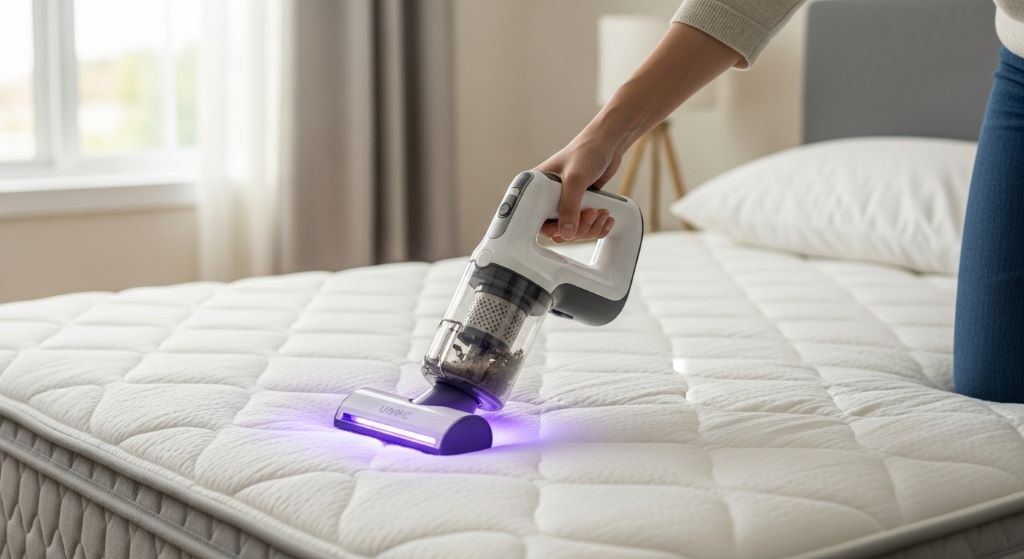
A mattress vacuum is designed specifically to address these issues. It uses powerful suction, UV light, and vibration technology to extract what ordinary vacuums miss.
What Makes a Mattress Vacuum Different From a Regular Vacuum
Not all vacuums are built the same. A standard floor vacuum is designed for carpets and hard surfaces. It moves dirt from one place to another. A mattress vacuum, on the other hand, is engineered for fabric and upholstery.
The key differences include:
- Suction strength calibrated for soft, layered fabrics
- UV-C light to kill bacteria, dust mites, and other microorganisms
- Vibration or beating heads that loosen debris embedded deep in the mattress
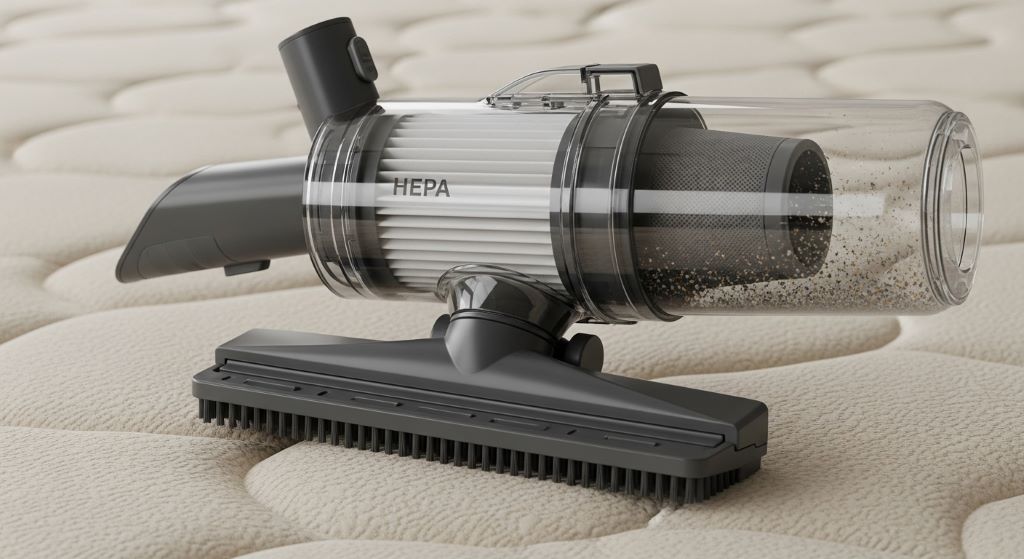
- HEPA filtration that traps fine particles instead of releasing them back into the air
- Compact, handheld design for easy maneuvering across a large surface
Therefore, if you want a truly clean sleeping surface, a specialized mattress vacuum is worth the investment.
Key Features to Look For
Suction Power
Suction is the foundation of any good vacuum. For mattresses, you need enough power to pull debris from deep within the fabric. However, too much suction on a soft surface can be uncomfortable to use and may damage delicate mattress covers.
Look for a model with adjustable suction settings. This gives you the flexibility to use higher power for thick mattresses and lower settings for thinner or more delicate surfaces. A suction range between 8,000 and 15,000 Pa is generally effective for mattress cleaning.
UV-C Light Technology
UV-C light is a powerful tool for killing germs without chemicals. It disrupts the DNA of bacteria, dust mites, and other microorganisms, preventing them from reproducing.
Many mattress vacuums include UV-C lamps built into the cleaning head. As you move the vacuum across the mattress, the light works on the surface simultaneously. This is one of the most important features for anyone focused on bed hygiene.
However, keep in mind that UV-C light only works on surfaces it directly contacts. It does not penetrate deep into the mattress layers. Therefore, it works best when combined with strong suction and vibration technology.
Vibration and Beating Function
This feature is often underestimated. Vibration heads beat against the mattress surface to loosen dust and debris that have become embedded in the fabric. Once loosened, the suction can capture them more effectively.
Think of it like beating a rug before vacuuming it. The action dislodges particles that suction alone cannot remove. Models with multiple vibration modes give you more control over the intensity, which is useful for different mattress types.
HEPA Filtration
HEPA stands for High-Efficiency Particulate Air. A true HEPA filter captures 99.97% of particles as small as 0.3 microns. This includes dust mite waste, pollen, pet dander, and mold spores.
Without a HEPA filter, a vacuum can pick up these particles and release them back into the air through the exhaust. That defeats the purpose entirely. Therefore, always choose a mattress vacuum with a certified HEPA filter.
Additionally, check how easy the filter is to clean or replace. Some models have washable filters, which saves money over time. Others use replaceable cartridges. Either option works, as long as you maintain the filter regularly.
Dustbin Capacity and Design
Mattress vacuums come in two main types: bagless and bagged. Each has advantages.
Bagless models are easy to empty and typically less expensive to maintain. However, emptying the dustbin can release trapped particles back into the air. Do this outdoors or over a trash can away from your sleeping area.
Bagged models contain the dust and debris more securely. When the bag is full, you simply remove and discard it without any direct contact with the debris. This is a better option for people with severe allergies.
For most users, a dustbin capacity between 200ml and 500ml is sufficient for a full mattress cleaning session.
Weight and Ergonomics
A mattress vacuum needs to be easy to use across a large, flat surface. Heavy models cause hand and wrist fatigue quickly. Look for a model that weighs between 1kg and 2.5kg for comfortable extended use.
The handle design also matters. A comfortable grip with intuitive controls makes the cleaning process much easier. Some models have LED indicators that show when an area has been adequately cleaned, which removes guesswork from the process.
Corded vs. Cordless
Corded models offer consistent suction power without worrying about battery life. However, the cord can limit your range of motion and make maneuvering around the bed more awkward.
Cordless models are more convenient and easier to move around freely. The trade-off is battery life. Most run between 20 and 40 minutes per charge. For a standard double or queen mattress, that is usually enough time. However, if you have a large mattress or want to clean pillows and upholstery in the same session, a longer battery life or a corded model may serve you better.
Types of Mattress Vacuums
Handheld Mattress Vacuums
These are the most common type. They are compact, easy to store, and purpose-built for mattresses and upholstered surfaces. Most handheld models include UV-C light and HEPA filtration as standard features.
They are ideal for regular weekly or bi-weekly cleaning sessions. If you have allergies or share your bed with pets, a handheld mattress vacuum is an excellent investment.
Upright Vacuums With Mattress Attachments
Some full-size upright vacuums come with a soft upholstery attachment. This can work for surface-level cleaning. However, these attachments rarely include UV-C light or vibration functions.
They are a decent option if you already own a quality upright vacuum and want a budget-friendly way to extend its use. Additionally, they are useful for cleaning carpeted areas before or after mattress work, giving you a versatile cleaning tool for home use.
Robot Mattress Vacuums
This is a newer category. Some manufacturers now produce small robotic units that can navigate a flat mattress surface automatically. You place the device on the mattress, activate it, and let it work on its own.
The technology is still developing. Currently, robot mattress vacuums tend to be less thorough than handheld models. However, they are a great choice for people who want a low-effort maintenance routine between deeper manual cleans.
How to Use a Mattress Vacuum Effectively
Owning the right tool is only half the battle. Using it correctly makes all the difference.
Start by removing all bedding — sheets, pillowcases, and mattress protectors. These should go directly into the wash. Then, use the mattress vacuum in slow, overlapping strokes across the entire surface. Do not rush. Slower passes allow the suction and UV light to do their job properly.
Pay extra attention to seams, edges, and indentations. Dust mites and debris tend to collect in these areas. Once you finish the top surface, flip or rotate the mattress and repeat the process on the underside.
Ideally, you should vacuum your mattress every two weeks. If you have pets that sleep in the bed, or if someone in your household has allergies, weekly cleaning is a better habit. This level of consistent bed hygiene will significantly reduce allergen levels over time.
What to Avoid When Buying a Mattress Vacuum
Some products look impressive in advertisements but underperform in real use. Avoid models that do not specify the type of UV light they use. True UV-C light operates at a specific wavelength. Some brands use vague terms like “UV light” without confirming effectiveness.
Also, be cautious of models with no filter at all, or those that only claim to have a “foam filter.” These do not adequately trap fine particles and can worsen air quality in your bedroom.
Additionally, skip models with very small dustbins under 150ml. You will need to stop and empty the bin multiple times during a single session, which makes the process slow and inconvenient.
Finally, avoid products with no warranty. A mattress vacuum is a health-related investment. A manufacturer that does not stand behind their product is a red flag.
Budget Considerations
Mattress vacuums range from budget-friendly to premium. Entry-level models start around $30 to $50. They offer basic suction and may include a UV light. However, build quality and filtration performance are often limited at this price point.
Mid-range models between $60 and $120 typically offer a better combination of suction power, HEPA filtration, and UV-C light. These are suitable for most households and represent the best value for money.
Premium models above $150 often include advanced features like multiple cleaning modes, larger dustbins, longer battery life, and digital displays. They are worth the investment for households with allergies, asthma, or young children.
Maintaining Your Mattress Vacuum
Like any cleaning tool, a mattress vacuum needs regular care. Empty the dustbin after every use. Clean or replace the filter according to the manufacturer’s schedule. Wipe the UV lamp cover with a dry cloth periodically to keep it free of dust, since buildup can reduce its effectiveness.
Store the vacuum in a dry, clean location. Moisture can damage electronic components and reduce the lifespan of the device. With basic maintenance, a quality mattress vacuum can last five or more years.
Conclusion
A clean mattress is not a luxury. It is a health decision. Dust mites, allergens, and bacteria accumulate in your sleeping surface over time, affecting the air you breathe every night.
Choosing the right mattress vacuum comes down to a few key factors. Look for strong suction, certified UV-C light, vibration technology, and true HEPA filtration. Consider your budget, your mattress size, and whether a corded or cordless model fits your routine better.
Avoid products with vague claims, no filtration, or no warranty. Invest in a model that is built to last and easy to maintain. Used consistently, a mattress vacuum is one of the most impactful cleaning tools for home health you can own.
Good bed hygiene starts with a good tool. Make the right choice, and you will sleep better — in every sense of the word.
Frequently Asked Questions
How often should I vacuum my mattress?
Vacuuming your mattress every two weeks is ideal for most households. If you have pets, allergies, or asthma, increase the frequency to once a week for the best results.
Can I use a regular vacuum instead of a mattress vacuum?
A regular vacuum can remove surface debris, but it lacks the UV-C light and vibration technology needed to kill dust mites and loosen deep-seated particles. A dedicated mattress vacuum is far more effective for thorough cleaning.
Is UV-C light in mattress vacuums safe to use?
Yes, when used correctly. Always keep the UV lamp face-down against the mattress surface during use. Avoid direct eye contact with the UV light, and do not point it at skin. Most models are designed with safety features to prevent accidental exposure.
What is the best mattress vacuum for allergy sufferers?
Look for a model with a certified HEPA filter, strong suction, and UV-C light. Bagged models are often a better choice for allergy sufferers because they prevent debris from escaping when emptied. Mid-range to premium options generally perform best in this category.
How long does it take to vacuum a queen-size mattress?
A thorough vacuuming session for a queen-size mattress typically takes 15 to 25 minutes. This includes slow, overlapping passes across the full surface. Taking your time ensures the suction and UV light have enough contact time to be effective.
Related Topics:
How to Choose the Right Garage Door for Canadian Weather and Style
Banishing the Grime: Your Ultimate Guide to a Sparkling Extractor Fan