
Geometric floor designs are transforming modern homes with bold patterns and innovative materials. These eye-catching elements create visual interest while adding personality to any space. Additionally, geometric patterns offer endless customization possibilities for homeowners seeking unique design solutions. Colorado Springs Home Living showcases how local residents embrace these trending floor designs to elevate their interior aesthetics.
The growing popularity of geometric flooring reflects broader design trends toward personalization and artistic expression. Modern homeowners want floors that serve as statement pieces rather than background elements. Therefore, retailers specializing in floor and decor are expanding their geometric pattern selections to meet increasing demand.
Furthermore, advances in manufacturing technology make complex geometric designs more accessible and affordable. Digital printing allows precise pattern reproduction across various materials. However, traditional techniques like hand-laid mosaic work remain popular for luxury applications.
Popular Geometric Patterns Dominating 2025
Hexagonal Designs
Hexagonal patterns continue their upward trajectory in 2025. These six-sided shapes create honeycomb-like arrangements that work beautifully in both small and large spaces. Additionally, hexagons offer versatile installation options from classic uniformity to creative mixed-size arrangements.
Large format hexagonal tiles make bold statements in entryways and living areas. Smaller hexagons work perfectly for bathroom floors and backsplashes. Therefore, this shape adapts to various room functions while maintaining visual coherence throughout homes.
Chevron and Herringbone Patterns
Chevron patterns create dynamic zigzag arrangements that energize any space. The pointed angles add movement and direction to floor designs. However, herringbone patterns offer a more subtle geometric approach with their broken zigzag formation.
These patterns work exceptionally well with wood-look tiles and luxury vinyl planks. Modern manufacturing produces realistic wood textures that enhance geometric arrangements. Additionally, these patterns complement both contemporary and traditional interior styles.
Diamond and Rhombus Formations
Diamond patterns bring sophistication and elegance to residential flooring. These four-sided shapes create optical illusions that can make rooms appear larger or more intimate. Therefore, strategic diamond placement influences spatial perception effectively.
Rhombus patterns offer similar benefits with their parallelogram shapes. These formations work particularly well in powder rooms and accent areas. However, larger applications require careful planning to avoid overwhelming smaller spaces.
Material Innovations Driving Geometric Trends
Luxury Vinyl Technology
Luxury vinyl plank technology revolutionizes geometric floor installations. These products combine durability with design flexibility previously unavailable. Additionally, click-lock systems simplify installation for both professionals and DIY enthusiasts.
Recent developments include enhanced texture replication and improved wear resistance. Manufacturers now produce luxury vinyl that closely mimics natural materials while offering superior performance characteristics. Therefore, homeowners enjoy beautiful geometric designs without traditional material limitations.
Porcelain Tile Advances
Large format porcelain tiles enable seamless geometric patterns with minimal grout lines. These oversized tiles reduce installation complexity while maximizing visual impact. However, proper substrate preparation becomes crucial for successful large tile installations.
Digital printing technology creates incredibly realistic surface textures and patterns. Porcelain manufacturers can replicate everything from natural stone to exotic wood grains. Additionally, through-body coloration ensures pattern consistency even with heavy wear.
Eco-Friendly Options
Sustainable flooring materials gain prominence in geometric design applications. Recycled content tiles and renewable bamboo products meet environmental consciousness demands. Therefore, homeowners can create stunning geometric floors while supporting sustainability goals.
Cork flooring offers unique geometric possibilities with its natural flexibility and comfort properties. Bio-based luxury vinyl alternatives provide traditional vinyl benefits without environmental concerns. Additionally, reclaimed wood creates authentic geometric patterns with historical character.
Color Schemes Defining 2025 Geometric Floors
Monochromatic Sophistication
Single-color geometric patterns create sophisticated, timeless appeals. Various shades of the same color family add depth without overwhelming visual complexity. Additionally, monochromatic schemes integrate seamlessly with existing decor elements.
Gray-scale geometric patterns remain particularly popular for their versatility. These neutral tones complement any accent color while maintaining long-term design relevance. However, warm beiges and cool blues also create striking monochromatic geometric floors.
Bold Contrast Combinations
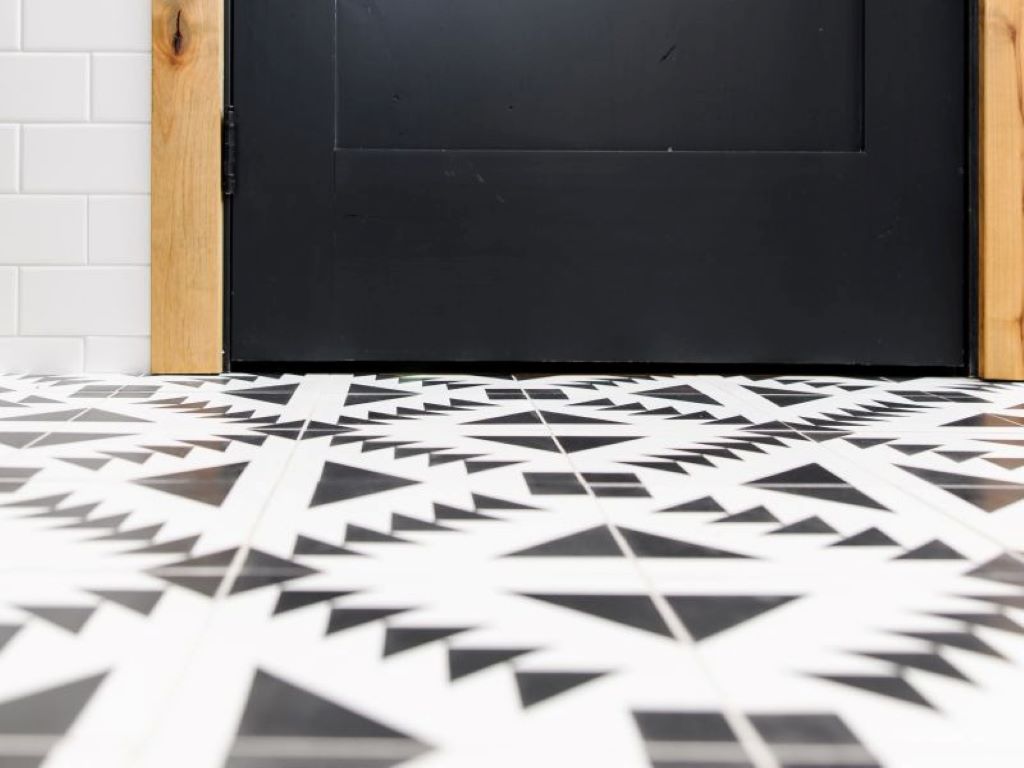
High-contrast geometric patterns make dramatic design statements. Black and white combinations never lose their classic appeal. Therefore, these timeless contrasts work effectively in both traditional and contemporary settings.
Navy blue and cream combinations offer sophisticated alternatives to stark black and white. These softer contrasts provide visual interest without overwhelming smaller spaces. Additionally, warm gray and white pairings create elegant geometric foundations.
Earth Tone Harmonies
Natural earth tone combinations reflect growing biophilic design trends. Warm browns, soft greens, and muted oranges create organic geometric patterns. However, these colors require careful balancing to avoid appearing muddy or unclear.
Terracotta and sage green combinations particularly resonate with 2025 design preferences. These colors connect interior spaces with natural outdoor environments. Additionally, earth tone geometrics age gracefully and maintain long-term appeal.
Room-Specific Geometric Applications
Kitchen Geometric Floors
Kitchen geometric floors must balance style with functionality. High-traffic areas require durable materials that resist spills and scratches. Therefore, porcelain tiles and luxury vinyl perform exceptionally well in kitchen applications.
Small geometric patterns work best in compact kitchens to avoid overwhelming the space. However, larger kitchens can accommodate bold geometric statements that define cooking and dining zones. Additionally, geometric patterns can visually separate kitchen islands from surrounding areas.
Bathroom Design Applications
Bathroom geometric floors offer opportunities for creative expression in smaller spaces. Hexagonal tiles particularly suit bathroom environments with their water-resistant properties. However, proper waterproofing remains essential regardless of pattern choice.
Geometric patterns can make small bathrooms appear larger through strategic design choices. Light colors and diagonal installations create spacious illusions. Therefore, careful pattern selection maximizes perceived bathroom dimensions.
Living Area Statements
Living room geometric floors serve as foundation elements for entire design schemes. Large patterns work well in spacious areas while smaller patterns suit intimate settings. Additionally, geometric floors can define conversation areas within open floor plans.
Consider furniture placement when selecting geometric patterns for living areas. Bold patterns require simpler furniture arrangements to avoid visual chaos. However, subtle geometric textures complement complex furniture groupings effectively.
Installation Considerations and Best Practices
Professional vs DIY Installation
Complex geometric patterns often require professional installation for optimal results. Intricate designs demand precise measurements and experienced technique. Therefore, homeowners should honestly assess their skill levels before attempting difficult installations.
Simple geometric patterns like basic hexagons or straightforward chevrons suit DIY installation. However, mixed patterns or custom designs benefit from professional expertise. Additionally, proper substrate preparation significantly impacts final installation quality.
Planning and Layout Strategies
Successful geometric floor installation begins with thorough planning and layout preparation. Create detailed scale drawings showing pattern placement and transitions. Therefore, potential issues become apparent before installation begins.
Consider room proportions when selecting geometric scale and orientation. Large patterns can overwhelm small rooms while tiny patterns may appear busy in large spaces. Additionally, pattern orientation affects how rooms feel in terms of width and length.
According to Architectural Digest, proper geometric floor planning prevents costly installation mistakes and ensures optimal visual impact.
Maintenance and Longevity Factors
Cleaning Geometric Patterns
Geometric floor patterns require specific cleaning approaches to maintain their visual impact. Grout lines in tiled geometric patterns need regular attention to prevent discoloration. Therefore, proper maintenance schedules preserve pattern clarity and color vibrancy.
Different materials within geometric patterns may require varying cleaning products and techniques. Test cleaning solutions in inconspicuous areas before applying to entire floors. Additionally, regular professional cleaning extends geometric floor lifespan significantly.
Long-term Pattern Relevance
Consider long-term design relevance when selecting geometric floor patterns. Classic patterns like herringbone and hexagons maintain appeal across design trend cycles. However, highly stylized patterns may appear dated more quickly.
Investment in quality materials and installation ensures geometric floors remain beautiful for decades. Premium products resist wear and maintain their original appearance longer. Therefore, upfront investment in quality pays dividends through extended floor life.
Technology Integration in Geometric Design
Digital Design Tools
Modern design software enables precise geometric pattern visualization before installation. These tools help homeowners and designers explore various options without physical samples. Additionally, 3D rendering shows how patterns will appear in actual room contexts.
Virtual reality applications allow immersive geometric floor pattern experiences. Users can “walk” on proposed patterns to evaluate their visual impact. However, physical samples remain important for texture and color accuracy assessment.
Smart Floor Integration
Emerging smart floor technologies integrate with geometric designs for enhanced functionality. Heated floors work seamlessly beneath geometric tile installations. Therefore, comfort features can complement beautiful geometric aesthetics.
LED accent lighting within geometric patterns creates dramatic evening ambiance. These systems highlight pattern elements while providing functional illumination. Additionally, programmable lighting changes geometric floor appearance throughout the day.
Real estate professionals from HGTV note that well-executed geometric floors significantly increase property values and buyer interest.
Conclusion
Geometric floor designs in 2025 combine artistic expression with practical functionality. Popular patterns include hexagons, chevrons, and diamond formations across various materials and color schemes. Additionally, technological advances make complex geometric installations more accessible and affordable.
Key considerations include material selection, color coordination, and proper installation planning. Therefore, successful geometric floor projects require careful preparation and attention to detail. Professional installation often ensures optimal results for complex patterns.
The trend toward personalized interior design drives continued geometric floor popularity. These distinctive patterns transform ordinary rooms into extraordinary spaces. However, long-term planning ensures geometric floor investments remain relevant and beautiful for years to come.
Frequently Asked Questions
What geometric floor pattern works best for small rooms? Small geometric patterns like mini hexagons or narrow chevrons work best for compact spaces. Additionally, light colors and diagonal installations can make small rooms appear larger.
Are geometric floors difficult to maintain? Maintenance difficulty depends on pattern complexity and material choice. However, regular cleaning and proper sealing keep most geometric floors looking beautiful with minimal effort.
Which materials work best for geometric floor patterns? Porcelain tiles, luxury vinyl planks, and natural stone offer excellent geometric pattern options. Therefore, material choice depends on budget, durability requirements, and aesthetic preferences.
Can I install geometric flooring myself? Simple geometric patterns suit DIY installation with proper tools and preparation. However, complex designs benefit from professional installation to ensure optimal results and pattern alignment.
How do I choose colors for geometric floor patterns? Consider existing decor, room size, and long-term design goals when selecting geometric floor colors. Additionally, neutral tones offer more flexibility while bold colors create stronger design statements.
Read More:
Embracing the Minimalist Japanese Aesthetic for Studio Apartments