
Seattle’s cool temperatures and frequent rainfall create ideal conditions for indoor moisture buildup. According to environmental studies, mold can begin growing within 24 to 48 hours when surfaces stay damp. Many homeowners overlook window coverings, even though they often collect hidden moisture. While maintaining blinds and shades, proper care methods such as deep cleaning white window blinds can also reduce dust and moisture retention. Therefore, understanding how to prevent mold on window coverings in Seattle, WA helps protect indoor air quality and extends the life of your window treatments.
Why Mold Forms on Window Coverings in Seattle
Seattle experiences long periods of rain and high humidity throughout the year. As a result, condensation frequently develops around windows. Moisture settles on blinds, curtains, and shades during cooler months. Consequently, mold spores find ideal conditions for growth.
Many homes also have limited airflow near windows. Therefore, trapped moisture remains on fabric and other materials longer. Older windows may worsen the problem because they allow more temperature differences. These conditions increase the risk of mold development.
Window coverings often collect dust and organic particles over time. Mold uses these materials as a food source. Furthermore, dark corners behind curtains create sheltered environments. As a result, mold colonies can expand unnoticed.
Identify the Most Vulnerable Window Covering Materials
Some materials resist moisture better than others. Fabric curtains often absorb humidity from the surrounding air. Therefore, they can stay damp for extended periods. This situation creates favorable conditions for mold growth.
Natural fibers such as cotton and linen require extra attention. They absorb water more easily than synthetic alternatives. In addition, they may dry slowly during Seattle’s wet season. Regular inspection becomes essential for these materials.
Wood blinds can also face moisture issues. Excess humidity may penetrate the surface and encourage fungal growth. Homeowners dealing with damaged glass should also understand how to replace a broken window pane because cracked windows often increase indoor moisture problems.
Control Indoor Humidity Levels
The most effective mold prevention strategy involves humidity control. Experts generally recommend keeping indoor humidity between 30% and 50%. Therefore, monitoring humidity levels helps prevent moisture accumulation. A simple hygrometer provides accurate readings.
Dehumidifiers work especially well in Seattle homes. They remove excess moisture from indoor air efficiently. Furthermore, they help protect furniture and flooring. Consistent operation reduces mold risks significantly.
Bathroom and kitchen exhaust fans also play an important role. These areas generate large amounts of moisture daily. Therefore, running fans during and after use improves ventilation. Better airflow lowers overall humidity levels.
Reduce Window Condensation Before It Reaches Coverings
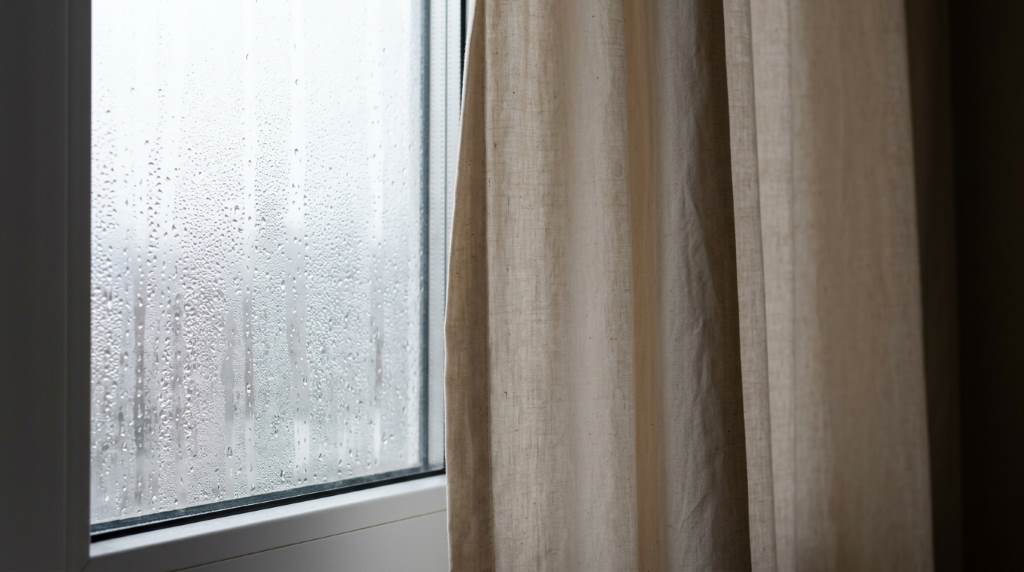
Condensation forms when warm indoor air meets cold glass surfaces. As a result, water droplets collect on windows. These droplets often transfer directly onto nearby coverings. Preventing condensation reduces mold risk dramatically.
Improving window performance can make a major difference. Many homeowners explore Energy Star ratings for windows when upgrading because efficient windows reduce temperature differences and limit condensation.
Keeping curtains slightly open during the day also helps. Air can circulate around the glass more effectively. Consequently, moisture evaporates faster. This simple habit supports a healthier indoor environment.
Create Better Airflow Around Windows
Good airflow prevents moisture from lingering near window coverings. Unfortunately, many people keep curtains tightly closed for long periods. This practice traps humid air against the window. Mold growth becomes more likely.
Opening blinds periodically encourages air movement. Similarly, leaving a small gap between curtains and windows improves circulation. Fresh air helps surfaces dry more quickly. As a result, mold has fewer opportunities to develop.
Ceiling fans can also support airflow throughout the room. Even low-speed operation improves air distribution. Therefore, moisture does not settle in one area. Consistent circulation supports mold prevention efforts.
Clean Window Coverings Regularly
Routine cleaning removes dust, dirt, and mold spores. These materials contribute to mold growth when moisture appears. Therefore, maintaining a cleaning schedule remains essential. Consistency delivers the best results.
For fabric curtains, washing according to manufacturer instructions works well. Many curtains can be machine washed periodically. Furthermore, complete drying prevents moisture retention. Damp fabrics should never be rehung.
Blinds require regular wiping with a microfiber cloth. Dust accumulation often occurs on horizontal surfaces. Therefore, weekly maintenance helps reduce potential mold food sources. Cleaner surfaces stay healthier longer.
Use Mold Resistant Window Treatments
Some window coverings offer greater resistance to moisture. Synthetic materials generally absorb less water than natural fabrics. Therefore, they dry faster after exposure to humidity. This characteristic reduces mold risks.
Vinyl blinds provide a practical option for moisture-prone spaces. Bathrooms and kitchens often benefit from these materials. Additionally, vinyl surfaces are easy to clean. Routine maintenance requires minimal effort.
Modern moisture-resistant shades also offer excellent performance. Many products include antimicrobial treatments. As a result, mold growth becomes more difficult. Homeowners gain additional protection against humidity-related issues.
Inspect Window Frames and Surrounding Areas
Window coverings may not be the original source of mold. Sometimes moisture enters through damaged frames or seals. Therefore, inspections should include surrounding areas. Early detection prevents larger problems.
Look for discoloration, peeling paint, or soft wood. These signs often indicate hidden moisture issues. Furthermore, musty odors may reveal concealed mold growth. Quick action limits potential damage.
When windows show structural deterioration, replacement may become necessary. Understanding the power of window pane replacement helps homeowners address moisture-related concerns before they affect coverings and indoor air quality.
A Unique Seattle Challenge: Moss Spores Near Windows
Many mold prevention articles overlook a local factor affecting Seattle homes. The region supports extensive moss growth because of persistent moisture. Moss releases microscopic spores into the environment. Some eventually enter homes through open windows.
These particles can settle on window coverings alongside dust. When humidity rises, they contribute to biological buildup. Therefore, regular cleaning becomes even more important in heavily shaded neighborhoods. This local condition deserves greater attention.
Homeowners living near dense vegetation should clean window areas more frequently. Seasonal inspections help identify buildup before problems develop. Consequently, mold prevention efforts become more effective. Small actions can deliver meaningful results.
Seasonal Mold Prevention Checklist
Seattle weather changes throughout the year. Therefore, prevention strategies should adapt accordingly. Seasonal maintenance helps address moisture challenges before they escalate. Consistency remains the key to success.
- Check indoor humidity every week during winter.
- Inspect window coverings monthly for discoloration.
- Clean blinds and shades regularly.
- Wash fabric curtains according to care instructions.
- Use exhaust fans after cooking and showering.
- Keep air circulating around windows daily.
- Repair damaged seals promptly.
- Monitor condensation during cold mornings.
Signs Mold May Already Be Developing
Early detection helps prevent widespread contamination. Small mold problems are easier to address. Therefore, homeowners should know the warning signs. Regular observation supports quick intervention.
Visible spots often appear as black, green, or gray patches. Musty odors may develop before stains become visible. In addition, allergy symptoms sometimes increase indoors. These indicators deserve immediate attention.
Warping fabrics and persistent dampness also signal trouble. Window coverings should feel dry under normal conditions. Therefore, unexplained moisture requires investigation. Prompt action prevents further growth.
Best Daily Habits for Long-Term Protection
Simple habits often provide the strongest defense against mold. Small daily actions reduce moisture accumulation significantly. Therefore, consistency matters more than occasional deep cleaning. Prevention works best when practiced regularly.
Open window coverings each morning when possible. Allow sunlight and airflow to reach surrounding surfaces. Furthermore, wipe visible condensation immediately. These habits reduce moisture retention effectively.
Keep furniture slightly away from windows as well. Air should move freely throughout the space. Consequently, damp areas dry more quickly. Better circulation supports healthier indoor conditions.
Conclusion
Preventing mold on window coverings in Seattle requires attention to humidity, airflow, cleaning, and window performance. Fortunately, most solutions remain simple and affordable. Consistent maintenance protects both your home and indoor air quality. Start inspecting your window coverings today, improve ventilation, and address moisture sources before mold gains a foothold.
FAQs
How often should I clean window coverings in Seattle?
Most window coverings benefit from light cleaning weekly and deeper cleaning every few months.
Can mold grow on blinds made from vinyl?
Yes, mold can grow on surface dust and residue even if the vinyl itself resists moisture.
What indoor humidity level helps prevent mold?
Keeping humidity between 30% and 50% helps reduce mold growth.
Do blackout curtains increase mold risk?
They can if they block airflow and trap moisture against windows.
Is window condensation always a problem?
Frequent condensation often signals excess indoor humidity that may lead to mold issues.