
Dry air in your sleeping space can lead to uncomfortable nights and health issues. Many people wake up with scratchy throats, dry skin, or congested sinuses. These problems often stem from inadequate moisture levels in the air. Fortunately, solving this issue doesn’t require spending a fortune on expensive equipment.
Cool mist humidifiers offer an effective solution for improving air quality without heating elements. They’re safer around children and pets compared to warm mist versions. Additionally, they consume less energy, which saves money on electricity bills. Finding an affordable model that meets your needs requires understanding key features and shopping strategies.
This guide will help you navigate the market and make an informed decision. You’ll learn what features matter most and which ones you can skip. Moreover, you’ll discover practical tips for finding quality products at reasonable prices. Let’s explore how to choose the perfect humidifier for better sleep and improved health.
Understanding Cool Mist Technology and Its Benefits
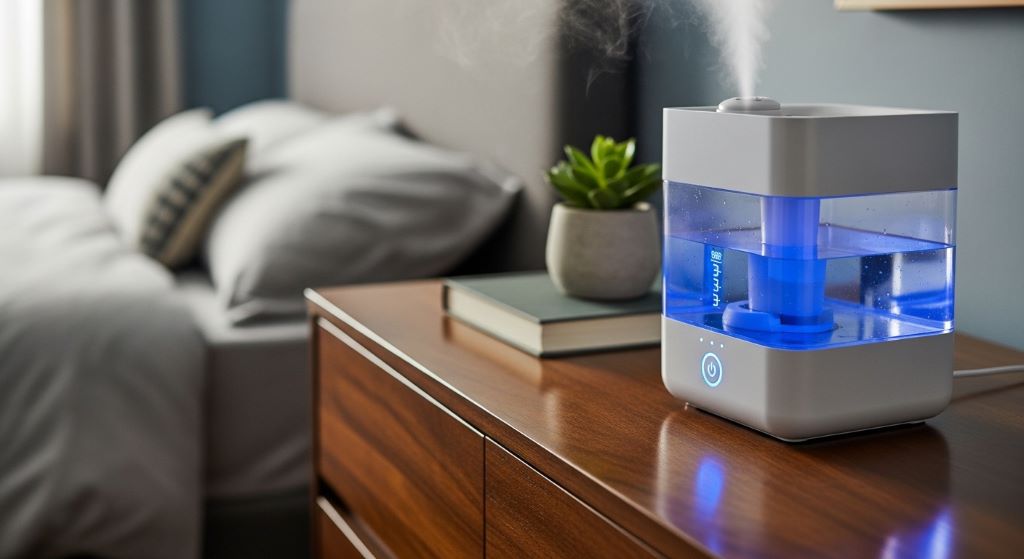
Cool mist humidifiers work by dispersing room-temperature water vapor into the air. Unlike warm mist models, they don’t boil water before releasing it. This makes them more energy-efficient and safer for households with young children. The technology comes in two main types: evaporative and ultrasonic.
Evaporative models use a fan to blow air through a wet wick or filter. The air naturally absorbs moisture as it passes through. These units are generally quieter and self-regulating. They stop adding moisture once the air reaches appropriate humidity levels. However, they require regular filter replacements.
Ultrasonic versions use high-frequency vibrations to create a fine mist. They operate almost silently, which is perfect for light sleepers. Additionally, they don’t need replacement filters in most cases. The main drawback is potential white dust if you use tap water with high mineral content.
Both types effectively increase moisture levels in your sleeping environment. They help alleviate dry skin, reduce static electricity, and ease breathing difficulties. Furthermore, proper humidity levels can reduce snoring and improve overall sleep quality. Many users report feeling more refreshed in the morning after using these devices.
The health benefits extend beyond just comfort. Adequate moisture in the air helps maintain your body’s natural defense mechanisms. Dry air can dry out nasal passages, making you more susceptible to infections. Therefore, maintaining proper humidity supports your immune system naturally.
Determining Your Bedroom’s Humidity Needs
Before purchasing any humidifier, assess your current air quality. Most experts recommend keeping indoor humidity between 30 and 50 percent. Levels below 30 percent are too dry, while above 60 percent promotes mold growth. You can measure existing levels with an inexpensive hygrometer from any hardware store.
Room size plays a crucial role in selecting the right capacity. Measure your bedroom’s square footage by multiplying length times width. Small bedrooms under 300 square feet need less powerful units. Medium rooms between 300 and 500 square feet require moderate capacity. Larger spaces over 500 square feet benefit from more robust models.
Climate considerations affect your humidifier needs significantly. Winter months typically bring drier air due to heating systems. Desert climates require year-round humidity control. Conversely, humid regions might only need occasional use during winter. Understanding your local climate helps you choose appropriate features.
Personal health factors influence your humidity requirements too. People with respiratory conditions often benefit from slightly higher humidity levels. Those prone to allergies might need more consistent moisture control. Additionally, children and elderly individuals typically require more attention to air quality.
Existing HVAC systems impact humidity levels considerably. Forced-air heating systems tend to dry out indoor air more than radiant heat. Central air conditioning also removes moisture from the air. Therefore, homes with these systems often need more aggressive humidification strategies.
Essential Features to Look for in Budget Models
Not all humidifiers offer the same features, and some cost more than they’re worth. Focus on essential functions that directly impact performance and convenience. Skip fancy add-ons that inflate prices without providing real value.
Tank capacity determines how long your humidifier runs between refills. Models with larger water reservoirs require less frequent attention. This is especially important for overnight use when you’re sleeping. A large tank humidifier can run for 12 to 24 hours continuously. This convenience justifies a slightly higher price for many users.
Noise level matters tremendously in sleeping environments. Even quiet sounds can disrupt sleep for sensitive individuals. Ultrasonic models typically operate more quietly than evaporative versions. Check customer reviews for real-world noise assessments. Manufacturers’ specifications don’t always reflect actual performance.
Adjustable mist output gives you control over moisture levels. This feature allows customization based on current conditions. Some days you might need maximum output, while others require minimal moisture. Variable settings provide flexibility without buying multiple devices.
Automatic shut-off prevents damage and safety hazards. This feature turns the unit off when water runs out. Without it, motors can overheat and create fire risks. Additionally, auto shut-off extends the device’s lifespan significantly. This essential safety feature should be non-negotiable.
Easy cleaning access saves time and frustration. Humidifiers require regular maintenance to prevent bacteria growth. Wide openings and removable tanks make cleaning much easier. Complicated designs discourage proper maintenance, which reduces effectiveness and creates health risks.
Smart Shopping Strategies for Maximum Savings
Finding affordable humidifiers requires strategic shopping and timing. Retailers follow predictable patterns that savvy shoppers can exploit. Knowing when and where to shop significantly impacts your final cost.
Seasonal sales offer the best discounts on humidifiers. Prices drop dramatically at the end of winter when demand decreases. Late spring and summer clearance events provide excellent opportunities. However, selection might be limited compared to peak season shopping. Plan ahead and buy during off-season for maximum savings.
Online marketplaces often beat brick-and-mortar store prices. Amazon, Walmart, and Target frequently offer competitive pricing. Additionally, online shopping allows easy price comparisons across multiple retailers. Subscribe to price tracking tools that alert you when costs drop. This passive approach ensures you catch the best deals.
Generic or store brands provide substantial savings over name brands. Many lesser-known manufacturers produce quality products at lower prices. Read reviews carefully to identify reliable budget options. Sometimes these products come from the same factories as premium brands. The main difference is often just the label and marketing.
Refurbished or open-box items offer like-new performance at reduced prices. Many retailers sell returned items that were never actually used. These products come with the same warranties as new ones. Check return policies carefully before purchasing. This option works well for budget-conscious shoppers willing to take minimal risk.
Coupon stacking multiplies your savings significantly. Combine manufacturer coupons with store promotions and credit card rewards. Sign up for retailer email lists to receive exclusive discount codes. Additionally, browser extensions automatically apply available coupons at checkout. These small savings add up to substantial discounts.
Avoiding Common Purchasing Mistakes
Many buyers waste money on features they don’t need or models that don’t perform well. Understanding common pitfalls helps you make smarter choices. Learn from others’ mistakes instead of making your own.
Oversized units waste energy and money. Bigger isn’t always better when it comes to humidifiers. A unit too powerful for your space creates excessive moisture. This leads to condensation on windows and potential mold problems. Moreover, oversized models cost more to purchase and operate.
Ignoring maintenance requirements creates long-term expenses. Some models require expensive filters or cleaning solutions. Calculate ongoing costs before making a purchase decision. A cheaper initial price might result in higher lifetime costs. Factor in replacement parts and cleaning supplies.
Focusing solely on price often backfires. The absolute cheapest option usually performs poorly and breaks quickly. This results in replacing the unit sooner than expected. Therefore, balance cost with quality and customer reviews. Aim for the best value rather than the lowest price.
Neglecting warranty coverage leaves you vulnerable to defects. Even budget models should include at least a one-year warranty. This protection ensures you can replace or repair faulty units. Additionally, longer warranties indicate manufacturer confidence in product quality. Always register your product to activate warranty coverage.
Skipping dimension checks leads to disappointment. Ensure the humidifier fits your intended space before purchasing. Measure available floor or table space accurately. Additionally, consider the unit’s height and width. An ill-fitting humidifier becomes an obstacle rather than a solution.
Maximizing Performance While Minimizing Costs
Getting the most from your humidifier doesn’t require expensive upgrades. Simple practices extend lifespan and improve effectiveness. These strategies save money while maintaining optimal performance.
Water quality affects humidifier performance and maintenance needs. Tap water contains minerals that create white dust and buildup. Distilled water eliminates these problems completely. However, buying distilled water adds ongoing expense. Consider a water filtration system for a middle-ground solution.
Regular cleaning prevents bacterial growth and mechanical failures. Empty and rinse the tank daily to prevent stagnant water. Deep clean the entire unit weekly using white vinegar. This natural cleaner removes mineral deposits without harsh chemicals. Proper maintenance extends your humidifier’s useful life significantly.
Strategic placement improves efficiency and effectiveness. Position your humidifier on a flat, stable surface away from walls. Maintain at least six inches of clearance on all sides. Additionally, place it away from electronics to prevent moisture damage. Central locations distribute humidity more evenly throughout the room.
Running time optimization reduces energy consumption. Use a hygrometer to monitor actual humidity levels. Turn the humidifier off when levels reach 45 to 50 percent. This prevents over-humidification and saves electricity. Some models include built-in humidistats that automate this process.
Room preparation enhances humidifier effectiveness. Close doors and windows to prevent moisture escape. Use weather stripping to seal drafts around doors. Additionally, consider using your humidifier with a ceiling fan on low. This circulates moist air more effectively throughout the space.
Evaluating Customer Reviews and Ratings
Online reviews provide invaluable insights into real-world performance. However, not all reviews are equally helpful or trustworthy. Learning to interpret feedback helps you make better decisions.
Look for patterns rather than individual complaints. Every product receives some negative reviews regardless of quality. Focus on issues mentioned repeatedly by multiple users. These recurring problems indicate actual design flaws. Conversely, isolated complaints might reflect user error or unrealistic expectations.
Recent reviews matter more than older ones. Manufacturers sometimes change designs or materials over time. A product with excellent reviews from three years ago might have different quality now. Therefore, prioritize feedback from the past six months. This ensures you’re getting current information.
Verified purchase badges indicate legitimate customer experiences. Many platforms mark reviews from confirmed buyers. These carry more weight than unverified reviews. Additionally, watch for overly enthusiastic reviews lacking specific details. These might be fake or incentivized feedback.
Photo and video reviews offer concrete evidence. Seeing the product in actual use provides context text cannot convey. Additionally, photos reveal size comparisons and aesthetic details. Videos demonstrating noise levels are particularly valuable for bedroom humidifiers. Prioritize reviews with multimedia content.
Star ratings require context to interpret correctly. A 4.5-star average from 1,000 reviews is more reliable than 5 stars from 10 reviews. More reviews provide better statistical accuracy. Additionally, read both positive and negative reviews. This balanced approach gives you a complete picture.
Understanding Long-Term Value Versus Initial Cost
The cheapest option rarely provides the best value over time. Smart shoppers consider total cost of ownership. This includes purchase price, operating costs, and maintenance expenses.
Energy efficiency impacts monthly utility bills. Models with Energy Star certification use less electricity. Although they might cost slightly more upfront, the savings accumulate. Calculate estimated annual operating costs using manufacturer specifications. This helps you compare true costs across models.
Build quality determines replacement frequency. A well-constructed unit lasting five years costs less than replacing cheap models annually. Look for solid construction with quality materials. Additionally, check if replacement parts are available. This extends usable life beyond the warranty period.
Filter costs add up significantly for some models. Calculate annual filter replacement expenses before purchasing. Some units require monthly filter changes costing ten to fifteen dollars each. Over several years, this exceeds the initial purchase price. Filterless models eliminate this ongoing expense entirely.
Warranty length indicates expected durability. Manufacturers offering longer warranties stand behind their products. A two or three-year warranty suggests better construction than 90-day coverage. Additionally, understand what the warranty actually covers. Some exclude normal wear items like filters.
Resale value might seem irrelevant for small appliances. However, quality humidifiers retain value better than cheap ones. You can recoup some investment when upgrading. This factor becomes more significant for higher-priced models. Consider it when deciding between budget and mid-range options.
Creating the Optimal Bedroom Environment
A humidifier alone doesn’t guarantee perfect bedroom humidity. Several factors work together to create ideal sleeping conditions. Understanding these relationships maximizes your investment’s effectiveness.
Temperature affects how humidity feels. Warmer air holds more moisture than cooler air. Therefore, bedroom temperature influences comfort levels significantly. Most people sleep best between 60 and 67 degrees Fahrenheit. Adjust your thermostat alongside your humidifier for optimal results.
Bedding materials interact with humidity levels. Natural fibers like cotton and linen breathe better than synthetics. They help regulate moisture around your body while sleeping. Additionally, these materials resist mold growth better in humid environments. Consider upgrading bedding as part of your comfort strategy.
Ventilation prevents excessive moisture buildup. Some air circulation prevents stagnant, overly humid conditions. Crack a window slightly or use a ceiling fan on low. This gentle air movement distributes humidity evenly. However, avoid creating drafts that negate your humidifier’s effects.
Plant life contributes natural humidity to indoor spaces. Certain houseplants release moisture through transpiration. Snake plants, peace lilies, and Boston ferns all add humidity naturally. Additionally, they improve air quality by filtering pollutants. Combining plants with mechanical humidification creates synergistic benefits.
Monitoring equipment helps maintain ideal conditions. Inexpensive hygrometers provide accurate humidity readings. Place one near your bed for most relevant measurements. Additionally, smart home systems can automate humidity control. These investments pay off through improved comfort and health.
Recognizing When to Upgrade or Replace
Even the best-maintained humidifiers eventually need replacing. Knowing when to upgrade saves money and prevents health risks. Watch for these warning signs that indicate replacement time.
Decreased output despite proper maintenance suggests mechanical failure. If your unit no longer produces adequate mist, internal components may have worn out. Cleaning and descaling might help temporarily. However, persistent problems indicate the end of useful life. Calculate whether repair costs justify fixing an older unit.
Strange odors indicate bacterial or mold growth you cannot remove. Musty or unpleasant smells mean contamination has penetrated materials. This creates health risks that outweigh any cost savings. Additionally, odors indicate the unit is adding pollutants rather than improving air quality. Replace immediately to protect your health.
Excessive noise compared to original operation signals problems. Worn bearings or damaged fans create unusual sounds. These mechanical issues typically worsen over time. Moreover, increased noise disrupts sleep quality. When repairs cost more than half the replacement price, buying new makes more sense.
Visible cracks or damage compromise safety and effectiveness. Damaged water tanks can leak and cause property damage. Cracked housings might expose electrical components to moisture. These safety hazards justify immediate replacement. Never continue using damaged equipment regardless of cost considerations.
Outdated technology might warrant upgrading even functioning units. Newer models offer improved efficiency and features. If your current unit is more than five years old, compare it to current options. Significant advances in technology might justify early replacement. Calculate potential energy savings and improved performance benefits.
Conclusion
Finding an affordable cool mist humidifier for your bedroom requires balancing multiple factors. Understanding technology differences helps you choose between evaporative and ultrasonic models. Assessing your specific needs ensures you select appropriate capacity and features. Moreover, smart shopping strategies maximize savings without sacrificing quality.
Focus on essential features like tank size, noise level, and automatic shut-off. These directly impact performance and safety. Additionally, consider long-term costs including energy consumption and maintenance. The cheapest option rarely provides the best value over several years.
Customer reviews offer valuable insights when interpreted correctly. Look for patterns in feedback and prioritize recent, verified purchases. Furthermore, understand that creating optimal bedroom humidity involves more than just the humidifier itself. Temperature, ventilation, and monitoring all contribute to success.
Regular maintenance extends your investment’s lifespan and effectiveness. Clean your unit weekly and use appropriate water quality. Strategic placement and operation timing improve efficiency. Finally, recognize when replacement becomes more cost-effective than continued repairs.
By following these guidelines, you can find a quality cool mist humidifier that fits your budget. Better sleep, improved health, and increased comfort await. Take time to research options and make an informed decision. Your investment in better air quality pays dividends every night.
Frequently Asked Questions
How often should I clean my cool mist humidifier?
You should rinse the water tank daily and perform a deep cleaning weekly. Daily rinsing prevents bacterial growth in stagnant water. For deep cleaning, use white vinegar or a manufacturer-recommended solution to remove mineral deposits. Disassemble all removable parts and clean thoroughly. Allow everything to dry completely before reassembling. Regular maintenance prevents mold growth and ensures your humidifier operates safely and effectively.
What size humidifier do I need for a standard bedroom?
For a typical bedroom between 300 and 400 square feet, look for a humidifier with a 1 to 2-gallon tank capacity. This size provides adequate moisture coverage for about 12 hours of continuous operation. Smaller bedrooms under 300 square feet can use smaller units, while master bedrooms over 500 square feet benefit from larger models. Always check the manufacturer’s recommended room size specifications before purchasing.
Can I use tap water in my cool mist humidifier?
You can use tap water, but distilled water is better for most cool mist humidifiers. Tap water contains minerals that create white dust settling on furniture and surfaces. These minerals also build up inside the unit, requiring more frequent cleaning. If you choose tap water, expect to clean more often and potentially replace parts sooner. Using distilled water extends your humidifier’s life and reduces maintenance needs.
How do I know if bedroom humidity levels are too high?
Signs of excessive humidity include condensation on windows, musty odors, or visible mold growth. You might also notice damp feeling fabrics or peeling wallpaper. The most accurate method is using a hygrometer to measure actual humidity levels. Readings consistently above 60 percent indicate too much moisture. Reduce humidifier output or run time if you notice these symptoms.
Are cool mist humidifiers safe to run all night?
Yes, cool mist humidifiers are safe for overnight operation when used properly. Choose models with automatic shut-off features that activate when water runs low. Place the unit on a stable surface away from bedding and electronics. Ensure the tank has sufficient water to last through the night. A large tank humidifier typically runs 10 to 24 hours, making it perfect for uninterrupted nighttime use. Always follow manufacturer safety guidelines.
Related Topics:
How to Create a Functional and Organized Laundry Room
The Benefits of a Smart Thermostat for Zoned Heating