Tiny homes solve many problems. They reduce costs. simplify living. support mobility and flexibility. Yet most people struggle with one issue after moving in: how to decorate a tiny home without making it feel crowded, cluttered, or uncomfortable.
This challenge grows quickly. Limited storage forces tough decisions. Poor layout choices waste valuable square footage. Oversized furniture blocks movement. Dark colors shrink the visual footprint. Without a strategy, a tiny home can feel smaller than it actually is.
The solution is not expensive furniture or trendy décor. It is intentional design. When every surface, corner, and vertical space works together, a tiny home becomes efficient, stylish, and calm. This guide explains exactly how to do that using proven layout, storage, lighting, and styling methods that maximize space without sacrificing personality.
What is the best way to decorate a tiny home efficiently?
The best way to decorate a tiny home is to prioritize multifunctional furniture, vertical storage, light color palettes, layered lighting, and intentional zoning. These strategies create visual openness, improve storage efficiency, and maintain comfort while preventing clutter from overwhelming limited square footage.
Decorating a tiny home starts with understanding one rule: every item must serve a purpose. In small spaces, decoration is not separate from function. It must support storage, movement, and comfort at the same time.
Begin by identifying activity zones. Even a 200–400 square foot home should include defined areas for sleeping, cooking, relaxing, and working. Zoning creates psychological structure. It prevents the entire home from feeling like one crowded room.
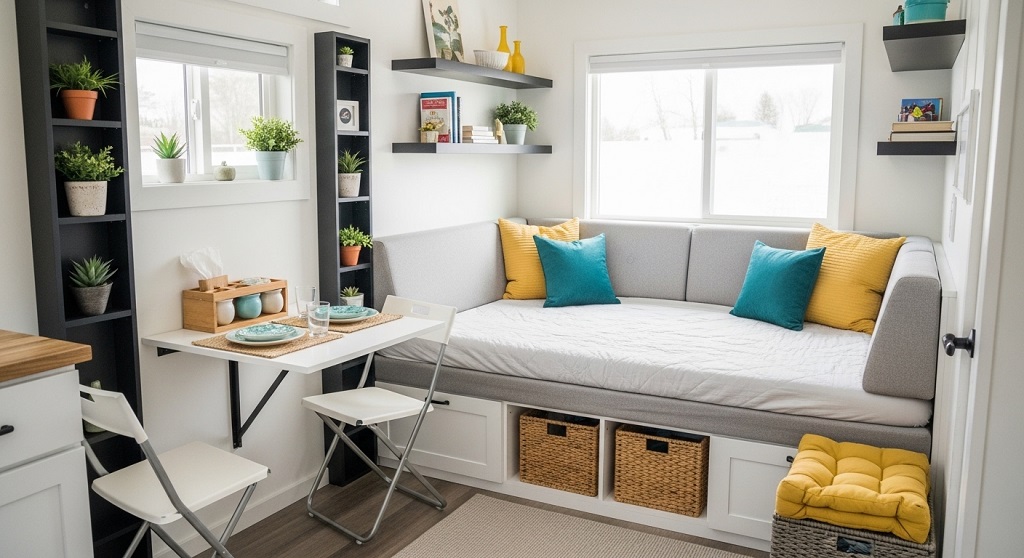
Next, choose furniture that performs multiple tasks. A bench with hidden storage replaces both seating and cabinets. A fold-down desk creates workspace without occupying permanent floor space. Wall-mounted shelving frees surfaces.
Lighting also changes perception. A single overhead light compresses a room visually. Layered lighting expands it. Combine ceiling lights, wall sconces, and task lighting.
Finally, keep decoration intentional. Limit accessories. Choose fewer but meaningful pieces. This maintains openness while still expressing personality.
How can furniture choices make a tiny home feel bigger?
Furniture affects movement and visual openness in a tiny home. Choosing slim-profile, raised-leg, foldable, and multifunctional pieces increases usable floor space, improves circulation, and prevents visual heaviness that makes small interiors feel cramped and restrictive.
Furniture occupies the largest percentage of space inside a tiny home. Selecting the wrong pieces immediately reduces comfort and functionality.
Start with scale awareness. Standard sofas and dining tables rarely fit efficiently inside compact layouts. Instead, choose apartment-sized seating or modular sections that adapt to different needs.
Raised-leg furniture creates visual airflow beneath objects. When the eye can see floor space under seating or storage, the room appears larger.
Foldable furniture solves temporary needs. Examples include:
- Drop-leaf dining tables
- Wall-mounted desks
- Convertible sofa beds
- Nesting coffee tables
Multifunctional furniture delivers the greatest impact. Consider these combinations:
- Storage ottoman + seating
- Murphy bed + shelving wall
- Bench seating + hidden drawers
- Platform bed + under-floor storage
Avoid bulky armrests and oversized backs. Slim silhouettes preserve pathways. This improves movement and prevents visual congestion.
The goal is flexibility. Furniture should adapt to daily routines instead of locking the layout into a single configuration.
Which color schemes work best for decorating a tiny home?
Light and neutral color palettes expand visual space inside tiny homes by reflecting natural light and reducing contrast boundaries. Soft whites, warm beige tones, muted grays, and pastel accents create depth while maintaining calm continuity across walls, ceilings, and furniture surfaces.
Color influences perceived space more than square footage does. Dark colors absorb light. Strong contrast breaks visual flow. Both effects shrink interiors.
A consistent palette creates continuity. When walls, cabinetry, and furniture share related tones, edges disappear visually. This makes the home feel wider.
Effective base palette options include:
- Soft white and cream
- Warm greige
- Light sand tones
- Pale sage accents
Accent colors still matter. Without contrast, interiors feel flat. Add color strategically through:
- Throw pillows
- Wall art
- Rugs
- Curtains
Ceiling color is often overlooked. Painting ceilings slightly lighter than walls increases perceived height.
Gloss level also affects brightness. Satin and semi-gloss finishes reflect more light than matte surfaces, especially near windows.
The result is a space that feels open without feeling sterile.
How do you create storage without making a tiny home cluttered?
Efficient tiny home storage relies on vertical shelving, hidden compartments, modular containers, and wall-mounted solutions that eliminate floor congestion. Smart storage design keeps essential items accessible while maintaining clean sightlines that preserve visual openness.
Storage is the biggest challenge in tiny home living. Without structure, clutter accumulates quickly.
Vertical storage solves this problem immediately. Walls offer unused space that can hold books, kitchen tools, and decorative elements.
Install shelves above:
- Door frames
- Windows
- Sofas
- Workstations
Hidden storage multiplies capacity without visual impact. Examples include:
- Under-bed drawers
- Lift-top coffee tables
- Toe-kick kitchen storage
- Staircase compartments
Open storage must remain curated. Too many visible items create visual noise. Use matching baskets or containers to maintain consistency.
The following comparison shows how different storage types affect usability and space efficiency:
| Storage Type | Best Use Case | Space Efficiency | Visual Impact |
|---|---|---|---|
| Wall Shelving | Books and décor | High | Low when organized |
| Under-bed Storage | Seasonal items | Very High | Invisible |
| Cabinet Towers | Kitchen supplies | Medium | Moderate |
| Hanging Rails | Utensils or clothing | High | Minimal |
The key principle is concealment plus accessibility. Store frequently used items within reach. Hide rarely used items.
What lighting strategies improve tiny home interiors?
Layered lighting improves brightness and perceived space inside tiny homes by combining ambient, task, and accent lighting sources. Multiple light layers eliminate shadows, highlight functional zones, and visually expand interiors without increasing physical square footage.
Lighting shapes how people experience a small home. Poor lighting creates corners that feel compressed.
Start with ambient lighting. Ceiling fixtures provide general illumination across the entire interior.
Next, add task lighting where activities happen. Install lights:
- Above kitchen counters
- Near reading areas
- Inside closets
- At workstations
Accent lighting improves atmosphere and depth. Wall sconces and LED strips highlight architectural edges and shelving.
Natural light is equally important. Avoid heavy curtains. Use sheer fabrics or blinds that retract fully.
Mirrors amplify daylight effectively. Place them opposite windows to reflect brightness deeper into the home.
Lighting temperature also affects comfort. Warm white light creates relaxation. Neutral white supports productivity.
Combining both improves flexibility throughout the day.
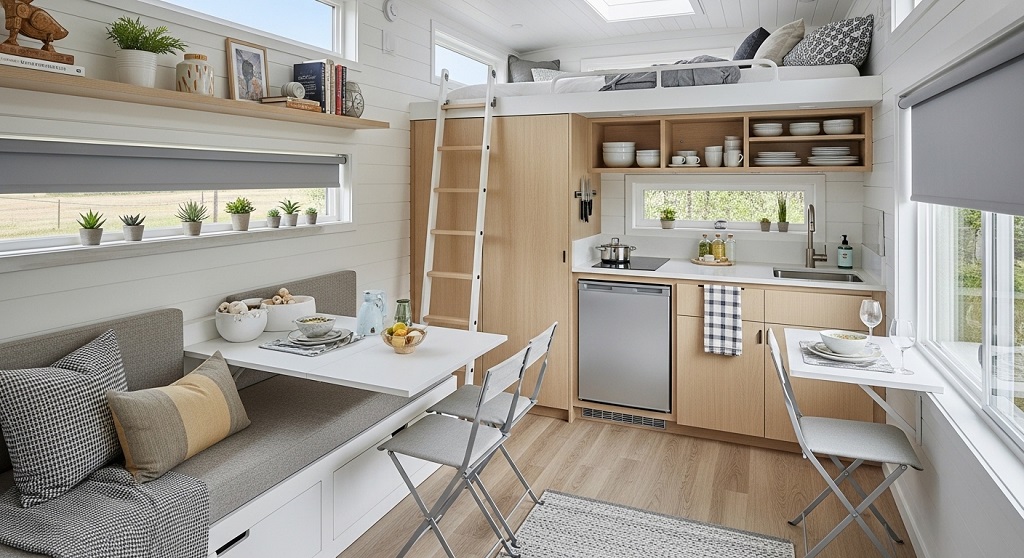
How can vertical space transform a tiny home layout?
Vertical design expands usable area in tiny homes by shifting storage, sleeping zones, and utilities upward. Loft beds, tall shelving, hanging systems, and stacked cabinetry increase capacity without reducing walking space or disrupting circulation patterns.
Most tiny homes waste vertical space. Walls often extend unused above eye level.
Loft beds are one of the most effective solutions. They free entire floor zones for seating or workspaces.
Tall cabinetry increases kitchen storage dramatically. Instead of horizontal cabinets, extend units to ceiling height.
Wall-mounted racks support:
- Cookware
- Bicycles
- Clothing
- Plants
Hanging systems also improve flexibility. Pegboards allow adjustable storage layouts that adapt over time.
Even decorative elements benefit from vertical placement. Gallery walls draw attention upward, increasing perceived height.
The goal is to shift storage away from the floor. This preserves movement and prevents congestion.
How do you personalize a tiny home without overcrowding it?
Personalizing a tiny home requires selective décor choices that highlight identity without increasing clutter. Focus on meaningful artwork, layered textures, compact plants, and coordinated accessories that add character while preserving simplicity and spatial balance.
Many people remove too much decoration when downsizing. This creates interiors that feel temporary or unfinished.
Personalization should remain intentional rather than excessive.
Start with statement pieces. One large artwork has more impact than multiple small frames.
Use textiles to introduce warmth. Rugs, cushions, and throws add depth without consuming space.
Indoor plants improve air quality and visual freshness. Choose compact varieties like:
- Snake plants
- Pothos
- Succulents
- Peace lilies
Limit decorative categories. Instead of mixing many styles, choose one consistent theme such as modern minimal, rustic compact, or Scandinavian functional.
This maintains clarity while preserving personality.
Conclusion
Decorating a tiny home becomes simple when every decision supports space efficiency. Multifunctional furniture increases usability. Light color palettes expand perception. Vertical storage protects floor space. Layered lighting removes visual compression. Intentional accessories maintain personality without clutter.
The problem most homeowners face is not limited square footage. It is unplanned decoration. Once each element serves both function and style, the home feels larger than expected.
Start by evaluating one room today. Replace one oversized item with a multifunctional alternative. Add one vertical storage solution. Adjust one lighting layer. Small changes compound quickly inside compact layouts.
Apply these strategies consistently, and your tiny home will become organized, comfortable, and visually open without requiring major renovations.
If you are planning a new tiny home setup or redesigning your current layout, create a checklist from this guide and begin implementing improvements step by step.
Frequently Asked Questions
How do I make a tiny home look modern?
Use neutral color palettes, clean-lined furniture, concealed storage, and minimal accessories. Add matte finishes and layered lighting. Avoid bulky décor. Keep surfaces clear to maintain a structured and contemporary appearance.
What furniture should I avoid in a tiny home?
Avoid oversized sofas, heavy armchairs, large coffee tables, and deep cabinets. These restrict circulation. Choose slim, multifunctional pieces instead to preserve openness and flexibility.
Can mirrors really make a tiny home look bigger?
Yes. Mirrors reflect natural light and extend sightlines. Placing them opposite windows increases brightness and creates the illusion of additional depth inside compact interiors.
Is open shelving good for tiny homes?
Open shelving works well when curated carefully. It keeps essentials accessible and reduces cabinet bulk. Use matching containers to prevent visual clutter.
How many colors should I use in a tiny home?
Limit the palette to two base colors and one accent tone. This maintains visual continuity and prevents fragmentation across small interior surfaces.
What flooring works best in tiny homes?
Continuous flooring materials such as light wood or vinyl planks improve visual flow. Avoid switching materials between zones because it breaks spatial continuity.
How do I decorate a tiny home on a budget?
Prioritize layout changes before buying décor. Rearrange furniture, install wall shelves, repaint walls with light tones, and add mirrors. These upgrades create major visual improvement at low cost.
Read More Also: How to Find an Affordable Cool Mist Humidifier for Your Bedroom
Learn More: How to Make Your Concrete Patio Weed-Proof