
Painting a wall sounds simple. You pick up a brush, dip it in paint, and go. However, anyone who has tried this without preparation quickly discovers how wrong that assumption is. The brush you choose has a direct impact on the final look of your walls. A poor choice leads to streaks, uneven coverage, and wasted paint.
Professionals know that the brush is just as important as the paint itself. They invest time in selecting the right wall painting tools before a single drop of paint is opened. Fortunately, you do not need years of experience to make smart choices. You just need the right information. This guide covers everything you need to know to pick the best paint brush for your walls.
Why the Right Brush Makes All the Difference
Every brush leaves a mark. The quality and type of that mark depends entirely on the brush you use. A high-quality brush holds more paint, releases it evenly, and leaves fewer visible strokes behind. A low-quality brush sheds bristles, drips, and creates lap marks that are difficult to fix.
Additionally, the right brush reduces your overall workload. Fewer coats are needed when each pass applies paint smoothly and consistently. Therefore, spending a little more on a quality brush saves both time and paint in the long run.
Professionals always say that preparation is everything in painting. Choosing the right brush is the very first step in that preparation.
Understanding Brush Bristle Types
Bristle type is the most fundamental factor in choosing a wall paint brush. There are two main categories: natural bristles and synthetic bristles. Each has its own strengths and is suited to different types of paint.
Natural Bristle Brushes
Natural bristle brushes are made from animal hair, most commonly hog or ox hair. These brushes work exceptionally well with oil-based paints, stains, and varnishes. The natural fibers absorb and hold oil-based materials effectively. However, they are not suitable for water-based or latex paints. When used with water, natural bristles absorb moisture and become limp. This makes them difficult to control and reduces paint application quality.
Synthetic Bristle Brushes
Synthetic bristle brushes are made from nylon, polyester, or a blend of both. These are the go-to choice for latex and water-based paints, which are the most common paints used on interior walls today. Nylon bristles are soft and flexible, making them ideal for smooth-finish brushes that leave minimal texture behind. Polyester bristles are stiffer and hold their shape better. A nylon-polyester blend gives you the best of both qualities.
Therefore, for most wall painting projects, a quality synthetic bristle brush is the right choice.
Choosing the Right Brush Size
Brush size affects both speed and precision. A larger brush covers more surface area with each stroke. However, it can be harder to control in tight spaces. A smaller brush offers more control but takes longer to cover large areas.
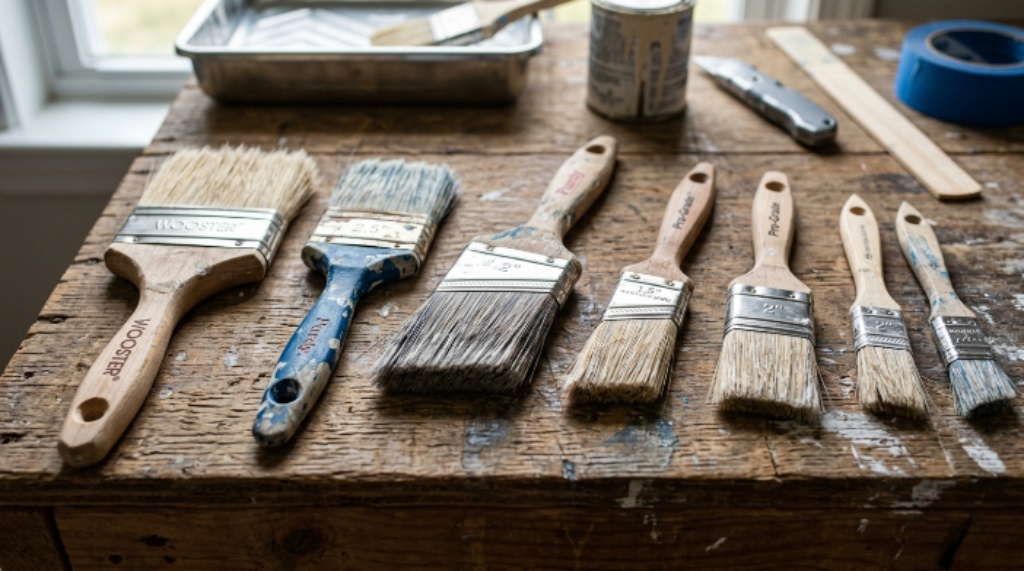
For general wall painting, a brush between two and a half inches and four inches wide is ideal. Most professionals reach for a three-inch or four-inch angled brush for large wall surfaces. Additionally, a smaller one-inch or one-and-a-half-inch brush is useful for trimming around edges, window frames, and door casings.
It is smart to have at least two brush sizes in your toolkit. One for broad coverage and one for detailed work. This approach is efficient and produces clean, professional results.
Flat vs. Angled Brushes: Which Should You Use?
The shape of the brush tip also plays a big role in the final result. Flat brushes have a straight, even edge across all the bristles. Angled brushes, also called sash brushes, have bristles cut at a diagonal.
Flat Brushes
Flat brushes are excellent for applying paint over wide, open surfaces. They hold a large amount of paint and release it evenly across broad areas. However, they can be tricky to use near corners and edges without creating overlaps or bleed lines.
Angled Brushes
Angled brushes are the most versatile option for wall painting. The diagonal tip allows you to cut a precise line along ceilings, trim, and corners. Additionally, the angled shape makes it easy to work paint into edges and tight areas without dripping. Most professional painters rely on an angled brush for the majority of their wall work.
Therefore, if you can only buy one brush for your project, an angled synthetic brush is the most practical choice.
What to Look for in Brush Construction
Beyond bristle type and shape, the physical construction of a brush matters. A well-made brush will last longer, perform better, and make your painting experience far more enjoyable.
The Ferrule
The ferrule is the metal band that connects the bristles to the handle. A quality ferrule is made from stainless steel or another rust-resistant metal. It should be firmly attached with no wobble. A loose ferrule causes the brush to lose its shape quickly and can lead to bristle shedding.
The Handle
Handles come in wood and plastic. Both work well, but the choice often comes down to personal preference. Wooden handles feel solid and comfortable in the hand. Plastic handles are lighter and easier to clean. However, the most important thing is grip comfort. A brush that feels good in your hand reduces fatigue during longer painting sessions.
Bristle Density and Taper
Tightly packed bristles hold more paint and apply it more evenly. When looking at a brush, press the bristles gently. They should feel full and spring back quickly. Additionally, the bristle tips should be slightly tapered or flagged, meaning they split into fine ends. This tapering helps create a smooth surface finish rather than leaving obvious brush lines.
Matching Your Brush to Your Paint Type
Matching brush to paint type is a rule that professionals never ignore. Using the wrong combination leads to poor results no matter how skilled the painter is.
For latex or water-based paints, always use synthetic bristle brushes. These are the most common paints for walls, and synthetic bristles are designed to work with them. For oil-based paints, enamels, or alkyd paints, natural bristle brushes deliver better performance because the bristles hold the thicker paint more effectively.
Additionally, check the paint’s viscosity. Thicker paints need a stiffer brush. Thinner paints work better with softer, more flexible bristles. Reading the paint can label will usually tell you what applicator is recommended.
Tips for Achieving a Smooth Wall Finish
Even with the right brush, technique matters. Here are some practical tips for getting the best results from your wall painting tools:
- Always load the brush by dipping only one-third of the bristle length into the paint. Overloading leads to drips and uneven application.
- Use long, smooth strokes in one direction. Avoid going back and forth repeatedly over wet paint, as this lifts the paint and creates a rough texture.
- Begin painting from the top of the wall and work downward. This way, any drips land on unpainted surfaces that you will cover next.
- Use a ‘cutting in’ technique along edges before filling in the main wall surface. This creates a clean border that a roller can then fill easily.
- Keep a wet edge at all times. Blending into wet paint prevents visible lap marks from forming.
Additionally, always clean your brushes properly after each use. A well-maintained brush performs like new for many projects to come.
How Much Should You Spend on a Paint Brush?
Paint brush prices vary widely. You can find a basic brush for a dollar or spend thirty dollars or more on a professional-grade option. So where is the sweet spot?
For occasional home painting, a mid-range brush in the eight to fifteen dollar range offers solid performance. These brushes hold paint well, have decent bristle density, and last several projects with proper care. However, if you paint frequently or want the absolute best results, investing in a higher-end brush pays off over time.
Avoid the temptation to go with the cheapest option available. Discount brushes often shed bristles and leave a rough, uneven finish. Therefore, you end up using more paint, taking more time, and achieving worse results. Spending a few extra dollars upfront is almost always worth it.
Conclusion
Selecting the right paint brush for your walls is a decision that affects every part of the painting process. From the smoothness of your finish to how much paint you use, the brush is at the center of it all.
Focus on bristle type first. Choose synthetic for latex paints and natural for oil-based paints. Then consider brush size and shape. An angled brush in the three to four inch range handles most wall painting tasks with ease. Additionally, pay attention to construction quality, including the ferrule, handle, and bristle density.
With the right smooth finish brushes in hand and a few good techniques in practice, you can achieve results that look truly professional. Take your time at the store or when shopping online, compare options carefully, and never underestimate the importance of the tool in your hand.
Frequently Asked Questions
1. What type of paint brush is best for painting interior walls?
A synthetic bristle angled brush in the three to four inch range is the best choice for most interior wall projects. It works well with latex paints, cuts clean edges, and applies paint evenly over large surfaces.
2. Can I use the same brush for different types of paint?
It depends on the brush material. Synthetic brushes work well with water-based paints only. Natural bristle brushes are suited for oil-based paints. Using the wrong brush for the paint type will reduce performance and finish quality. However, if you clean a synthetic brush thoroughly, you can reuse it for another water-based paint project.
3. How do I prevent brush marks on walls?
Use long, smooth strokes and avoid overloading the brush with paint. Work from a wet edge and do not go back over paint that has begun to dry. Additionally, using a high-quality synthetic brush with tapered bristles significantly reduces visible brush marks.
4. How do I clean and store paint brushes after use?
For latex paint, rinse the brush under warm running water while gently working the bristles until the water runs clear. For oil-based paint, use mineral spirits or paint thinner. After cleaning, reshape the bristles and store the brush flat or hang it bristle-down. Never store a brush resting on its bristles as this causes permanent bending.
5. Is a brush or roller better for painting walls?
Both have their place. Rollers cover large flat surfaces faster and create a more uniform texture. Brushes are essential for edges, corners, and detailed areas. Most professional painters use both together. They brush the edges first and then roll the main wall surface. This combination produces the cleanest and most efficient result.
Related Topics:
How to Find an Affordable Stair Vacuum Cleaner That Actually Works
How to Pick the Best Mattress Vacuum for a Healthier Home