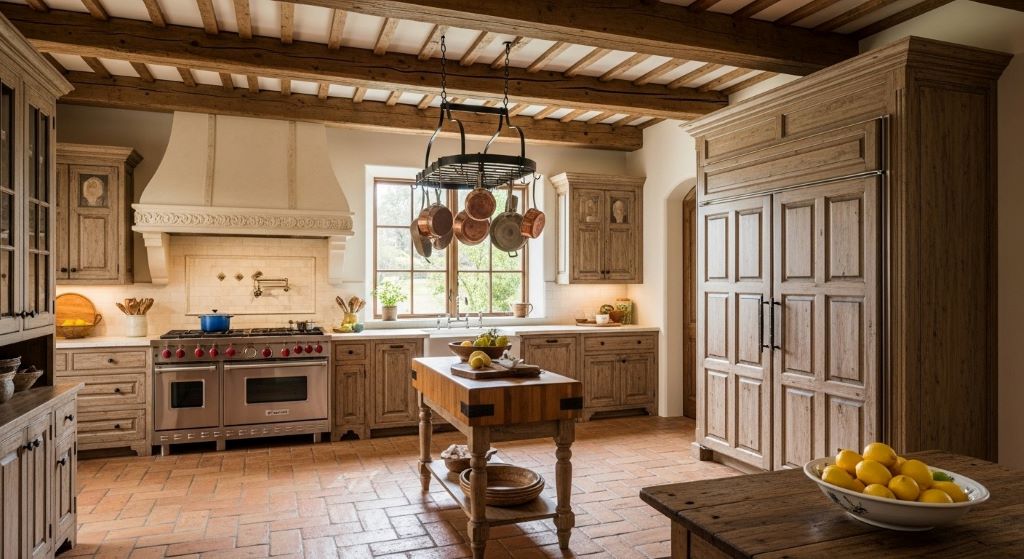
Tuscan kitchens embody rustic elegance with warm earth tones, natural materials, and timeless charm. However, modern functionality requires contemporary appliances that can clash with traditional aesthetics. Successfully blending Old World ambiance with current technology creates kitchens that honor Tuscan heritage while serving modern lifestyles.
This guide reveals professional strategies for concealing modern appliances within authentic Tuscan kitchen designs. Proper integration maintains aesthetic integrity while providing the convenience today’s homeowners demand.
Understanding Authentic Tuscan Kitchen Design Elements
Traditional Tuscan kitchens feature thick plaster walls in warm ochre, terracotta, and cream tones. Exposed wooden beams cross ceilings, adding architectural character and rustic warmth. Stone or terracotta tile floors provide durable, natural surfaces that age beautifully.
Hand-plastered walls create textured surfaces unlike smooth modern drywall. Venetian plaster techniques produce depth and luminosity mimicking centuries-old Italian villas. Additionally, imperfections in wall surfaces contribute authentic character rather than appearing as flaws.
Open shelving displays pottery, copper cookware, and everyday dishes as decorative elements. Tuscan kitchens historically lacked upper cabinets, instead featuring floating shelves or plate racks. Therefore, concealing modern appliances requires creative solutions beyond standard cabinetry.
Large farmhouse sinks in fireclay or copper anchor workspaces as functional focal points. Substantial ranges or hearths dominate cooking areas, often featuring decorative tile surrounds. These traditional elements establish the foundation for integrating modern conveniences invisibly.
Selecting Appliances That Blend With Tuscan Aesthetics
Panel-ready appliances accept custom cabinet fronts matching surrounding cabinetry. Refrigerators, dishwashers, and wine coolers disappear behind coordinated wood panels. This approach maintains visual continuity throughout the kitchen design.
Choose appliances in colors complementing Tuscan palettes rather than standard stainless steel. Matte black, bronze, and copper finishes harmonize with rustic materials. Moreover, these warmer tones feel more authentic than shiny contemporary surfaces.
Professional-style ranges in cream, burgundy, or black fit Tuscan aesthetics better than stainless models. Brands like La Cornue and Lacanche manufacture ranges resembling vintage European designs. These statement pieces become authentic-looking focal points rather than modern intrusions.
Avoid appliances with digital displays, touch controls, or LED lights when possible. Analog controls and mechanical timers maintain period-appropriate appearances. However, when digital features prove necessary, select models with discreet displays that minimize modern visual cues.
Concealing Refrigerators Behind Custom Panels
Built-in refrigerators integrate seamlessly when covered with cabinetry panels matching surrounding storage. Column refrigerators and freezers allow separate placement for better space utilization. Additionally, splitting refrigeration reduces individual appliance sizes, making concealment easier.
Armoire-style refrigerator enclosures create furniture-like appearances appropriate for Tuscan kitchens. Distressed wood cabinets with decorative hardware disguise modern cooling technology completely. Open the doors to reveal refrigeration while maintaining rustic facades when closed.
Panel specifications must match exact refrigerator dimensions for proper fit and function. Work with appliance manufacturers to obtain correct panel sizes and mounting hardware. Therefore, plan refrigerator selection before finalizing cabinetry designs.
Install refrigerators away from primary kitchen focal points when complete concealment proves impossible. Positioning appliances in butler’s pantries or adjacent spaces maintains Tuscan character in main cooking areas. Moreover, secondary locations often provide better traffic flow.
Hiding Dishwashers Within Cabinetry Design
Panel-ready dishwashers accept wood fronts matching base cabinets perfectly. Integrated controls inside door tops eliminate visible buttons disrupting cabinet faces. This complete concealment makes dishwashers indistinguishable from surrounding storage.
Position dishwashers adjacent to farmhouse sinks for functional efficiency and visual balance. The substantial sink draws attention while the dishwasher disappears into cabinetry. Additionally, this placement optimizes dish-washing workflows.
Consider drawer-style dishwashers for additional concealment flexibility. Two separate dishwasher drawers look like standard cabinet drawers when closed. These smaller units fit various locations throughout kitchen layouts.
Distressed or hand-painted cabinet panels on dishwashers enhance Tuscan authenticity. Match aging techniques used on other cabinetry for cohesive appearances. However, ensure panels withstand moisture and heat near dishwasher operations.
According to Architectural Digest, integrated appliances maintain design continuity while providing modern functionality in traditional kitchen styles.
Integrating Range Hoods Into Tuscan Design
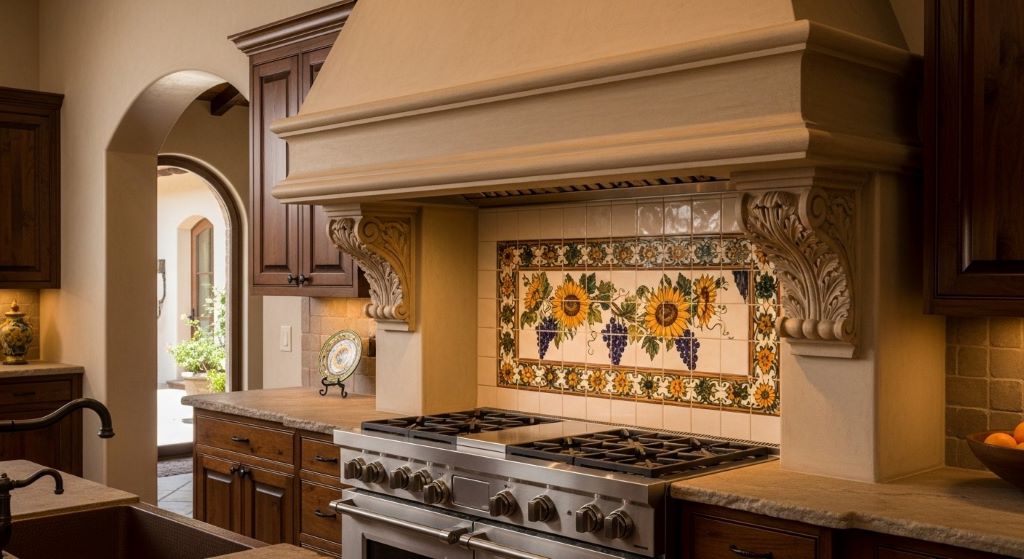
Custom plaster range hoods become architectural features rather than appliance afterthoughts. Build substantial hoods extending to ceilings, incorporating decorative corbels and tile details. These statement pieces honor traditional Tuscan fireplace-style cooking areas.
Conceal modern ventilation equipment inside decorative plaster structures. Powerful blowers hide within substantial hood volumes while exhaust ducts run invisibly through walls. Therefore, functionality doesn’t compromise aesthetic intentions.
Terracotta tile, hand-painted ceramics, or natural stone embellish hood surfaces authentically. These traditional materials distract from modern ventilation purposes underneath. Additionally, decorative tiles reference Italian heritage throughout the design.
Copper range hoods develop beautiful patinas over time, enhancing Tuscan character. Hammered copper sheets formed into traditional hood shapes combine functionality with Old World craftsmanship. Moreover, copper naturally complements warm Tuscan color palettes.
Install pot racks beneath range hoods to reinforce traditional cooking area aesthetics. Hanging copper pots and iron utensils create visual interest while maintaining period-appropriate appearances. However, ensure adequate clearance for safe cooking operations.
Disguising Small Appliances in Appliance Garages
Appliance garages hide countertop clutter behind cabinet doors or tambour shutters. Dedicate sections of counter space for storing toasters, coffee makers, and food processors. These enclosures maintain clean countertops essential to Tuscan simplicity.
Build appliance garages with matching cabinetry creating seamless wall appearances. Tambour doors slide upward into cabinets, providing easy access without door swing clearance. Additionally, interior electrical outlets eliminate visible cords on countertops.
Position appliance garages in corners or less visible counter sections. Reserve prominent counter areas for decorative elements like fruit bowls and olive oil bottles. Therefore, modern conveniences remain accessible without dominating visual space.
Include ventilation in appliance garages housing heat-generating equipment. Cut holes in garage backs connecting to wall cavities for heat dissipation. Moreover, adequate ventilation prevents moisture buildup and appliance damage.
Creating Hidden Coffee and Beverage Stations
Dedicated coffee stations with panel-ready espresso machines maintain Tuscan aesthetics. Built-in coffee systems install flush with cabinetry, accepting wood panels matching surroundings. These integrated systems provide modern convenience without visual disruption.
Butler’s pantries offer ideal locations for complete beverage station concealment. Position coffee makers, wine refrigerators, and ice makers in adjacent spaces. This separation maintains pristine Tuscan character in primary cooking areas while providing full modern functionality.
Pocket doors conceal beverage stations when not in use. Slide doors into wall pockets to reveal complete coffee bars, then close for seamless wall appearances. Additionally, pocket doors save space compared to traditional swinging doors.
Install wine refrigerators behind decorative iron grilles resembling traditional wine cellar doors. This approach acknowledges Italian wine culture while hiding modern refrigeration technology. Moreover, iron grilles allow necessary ventilation while maintaining authentic appearances.
Incorporating Modern Lighting Without Disrupting Tuscan Character
Recessed lighting provides general illumination without visible modern fixtures. Install recessed cans in plaster ceilings, painting trim rings to match ceiling colors. These nearly invisible light sources maintain focus on traditional architectural elements.
Wrought iron chandeliers and sconces provide ambient lighting with period-appropriate style. Choose fixtures with Edison-style bulbs mimicking candlelight rather than bright white LEDs. Therefore, lighting quality enhances rather than contradicts rustic ambiance.
Under-cabinet lighting requires careful integration to avoid modern appearances. LED strip lights hidden beneath cabinet bottoms illuminate counters without visible fixtures. However, warm color temperatures prevent cold, contemporary lighting quality.
Install dimmer switches controlling all lighting circuits for atmospheric flexibility. Modern dimming technology hides inside wall boxes behind traditional switch plates. Additionally, dimming capability allows adjusting lighting moods throughout the day.
Concealing Microwaves Strategically
Built-in microwave drawers install below countertops, maintaining clean backsplash areas. These drawer-style units open downward, providing easy access without occupying wall space. Moreover, drawer microwaves blend with surrounding base cabinetry when closed.
Microwave trim kits allow installation within standard cabinetry openings. Custom wood panels frame microwaves, integrating them into cabinet runs. This approach works better than countertop models dominating workspace.
Position microwaves in pantries or butler’s pantries away from primary kitchen views. This placement provides convenient access while removing modern appliances from traditional Tuscan spaces. Additionally, secondary locations often prove more practical for actual microwave usage.
Some homeowners eliminate microwaves entirely, embracing fully traditional cooking methods. This purist approach maximizes Tuscan authenticity while requiring lifestyle adjustments. However, convection ovens and warming drawers provide alternative reheating options.
Managing Technology and Smart Home Integration
Conceal smart home controls, speakers, and charging stations within drawers and cabinets. Modern technology disrupts Tuscan aesthetics more than appliances. Therefore, dedicated technology storage maintains period integrity.
Install outlets inside cabinet interiors for charging devices out of sight. Eliminate countertop charging stations that clash with rustic sensibilities. Additionally, hidden outlets reduce visible cord clutter.
Choose appliances without Wi-Fi connectivity indicators and glowing displays when possible. Constant blinking lights and digital screens contradict Tuscan timelessness. Moreover, simpler appliances often prove more reliable long-term.
According to Elle Decor, successfully blending traditional design with modern technology requires prioritizing aesthetic continuity over showcasing contemporary features.
Selecting Appropriate Cabinet Hardware and Details
Hand-forged iron pulls and latches reinforce Old World craftsmanship throughout cabinetry. Avoid shiny chrome or stainless hardware that appears contemporary. Additionally, varied hardware styles add collected-over-time character.
Distressed wood cabinetry with hand-applied finishes conceals modern construction methods. Techniques like glazing, antiquing, and physical distressing create centuries-old appearances. Therefore, new cabinets gain instant heritage.
Open shelving breaks up solid cabinetry runs while providing appliance concealment opportunities. Strategic shelving placement guides eyes away from hidden appliances toward displayed pottery and copper. Moreover, open shelving reinforces traditional Tuscan storage methods.
Incorporate furniture-style cabinet pieces like hutches and armoires. These freestanding elements provide substantial visual interest while housing hidden modern appliances. Additionally, furniture pieces enhance collected, unfitted kitchen aesthetics.
Planning for Adequate Ventilation and Electrical Needs
Modern appliances require significant electrical capacity and proper ventilation. Plan electrical service upgrades early in renovation processes. Additionally, adequate circuits prevent tripped breakers and potential fire hazards.
Conceal electrical outlets beneath cabinets or inside appliance garages whenever possible. Visible outlet covers disrupt plaster wall authenticity. Therefore, strategic outlet placement balances accessibility with aesthetic goals.
Ensure range hood ventilation ducts run efficiently to exterior walls. Longer duct runs reduce ventilation effectiveness, requiring more powerful blowers. Moreover, powerful ventilation proves essential when cooking generates significant heat and moisture.
Install dedicated circuits for major appliances preventing electrical overload. Refrigerators, dishwashers, and ranges each need independent circuits. However, route wiring through walls and ceilings to maintain hidden modern infrastructure.
Conclusion
Creating Tuscan kitchens with properly hidden modern appliances requires careful planning and strategic design choices. Panel-ready appliances, custom enclosures, and thoughtful positioning maintain Old World character while providing contemporary functionality. Success depends on prioritizing aesthetic continuity through matching finishes, traditional materials, and architectural details. Therefore, homeowners can enjoy authentic Tuscan ambiance without sacrificing modern convenience. The investment in proper appliance integration creates timeless kitchens honoring Italian heritage while serving current lifestyles perfectly.
Frequently Asked Questions
What appliances are hardest to hide in Tuscan kitchens?
Refrigerators present the biggest challenge due to their size. However, panel-ready models with custom wood fronts integrate seamlessly. Microwaves also prove difficult but work well in dedicated pantries or as drawer units beneath countertops.
Do hidden appliances cost significantly more than standard installations?
Yes, panel-ready appliances typically cost 20-40 percent more than standard models. Additionally, custom cabinet panels and integration hardware add expenses. However, the aesthetic payoff justifies costs for authentic Tuscan designs.
Can I retrofit existing kitchens to hide appliances Tuscan-style?
Partial retrofitting works by adding appliance garages, custom range hoods, and furniture pieces concealing appliances. Complete integration often requires substantial renovation including new cabinetry. Therefore, assess budgets and aesthetic priorities before beginning projects.
How do I maintain hidden appliances in Tuscan kitchens?
Panel-ready appliances maintain like standard models but require careful panel removal for service access. Keep appliance manuals documenting panel removal procedures. Additionally, schedule regular maintenance preventing major repairs requiring extensive disassembly.
Will hiding appliances affect resale value?
Properly integrated appliances typically increase resale value by creating cohesive, high-end designs. However, ensure modern functionality remains accessible. Buyers appreciate beautiful aesthetics combined with practical convenience in kitchen spaces.
Related Topics: