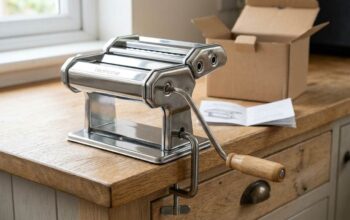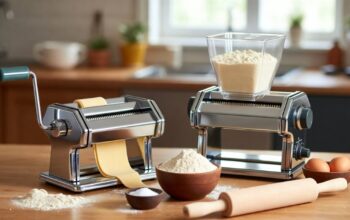
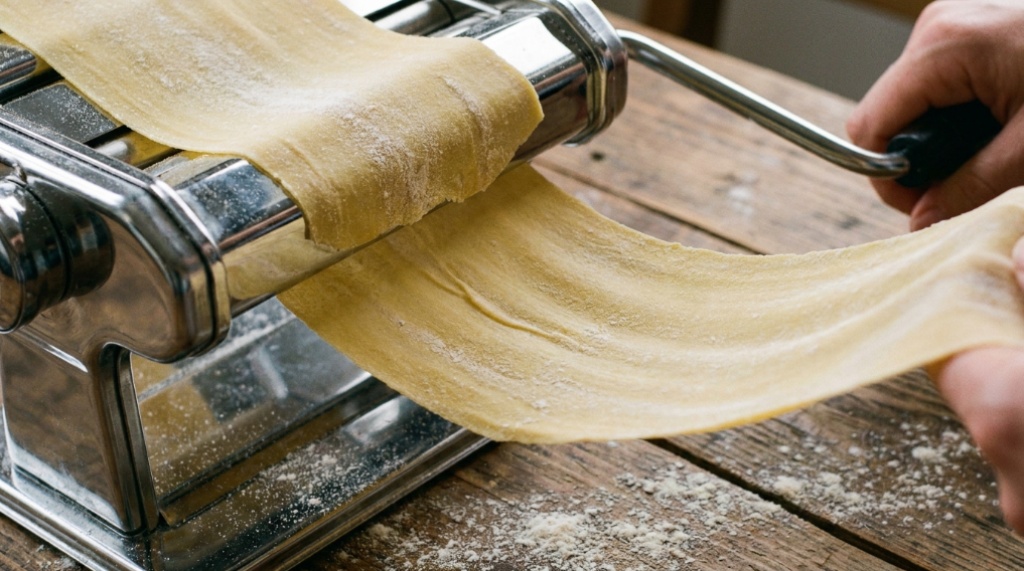
The Sailnovo pasta maker is a compact 2-in-1 machine that combines mixing and extrusion in a single unit, and its nine thickness settings are the feature buyers ask about most. Understanding those settings matters because they determine what shapes you can make, how well the dough holds together, and whether the machine fits the kind of pasta you actually cook. This guide breaks down how the settings work, which ones suit which doughs, and where the machine’s real limits sit.
Key Takeaways
- The nine settings are selectable discs or dial positions that control extrusion thickness, not roller gap like a traditional crank pasta machine.
- Thinner settings suit light doughs and quick-cooking pasta; thicker settings hold up better with semolina and shaped pasta.
- Dough consistency affects results more than the setting itself, so hydration needs adjusting before you blame the disc.
- Small extruder machines like this one struggle with very stiff doughs regardless of which setting you choose.
What the Nine Thickness Settings Actually Control
On the Sailnovo, thickness is controlled by extrusion, not by rollers. You load dough into a chamber, and a screw pushes it through a selected disc or opening. Each setting changes the diameter or profile of the pasta that comes out. That is fundamentally different from a hand-cranked roller machine, where you feed a sheet of dough between two adjustable rollers and thin it in repeated passes.
This distinction matters because extrusion settings affect texture as well as size. Extruded pasta is pressed into shape rather than laminated, so it tends to have a slightly denser, more uniform surface. A detailed Sailnovo pasta maker review will usually note that the machine pairs its thickness options with shape discs, which is why the settings are best understood as a range of pasta formats rather than a simple thin-to-thick dial.
Why “Thickness” Is Slightly Misleading
When a machine offers nine settings, buyers often picture nine levels of the same shape. In practice, many extruders group settings by shape family: thin strands, medium strands, tubes, and flat ribbons. Two settings may produce the same thickness but different widths, or the same width with different wall thickness. Reading the manual’s disc guide matters more than counting to nine.
How Setting Choice Changes Cooking Time
Thinner extruded pasta cooks faster and absorbs sauce more aggressively. Thicker shapes need longer boiling and hold their bite better in baked dishes. If you routinely make lasagna or baked ziti, the thicker settings are the practical choice. If you mostly make quick weeknight pasta, thinner strands will serve you better.
Matching Settings to Dough Type
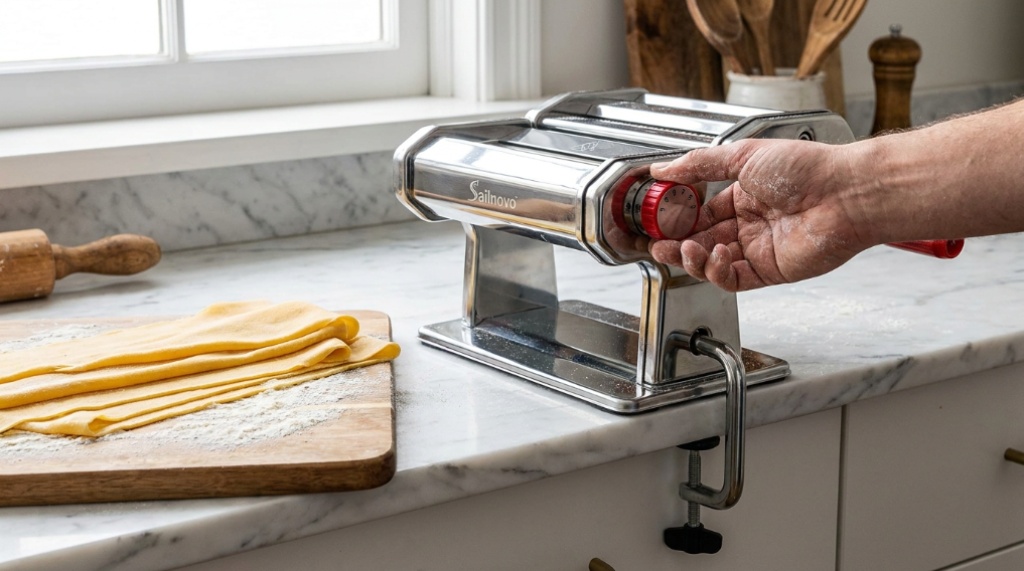
The setting only works if the dough is right. Extruders are far less forgiving than roller machines, and the most common failure is dough that is too dry or too stiff.
- Egg dough (soft, higher hydration): Works well on thin and medium settings. Flows through the chamber without excessive resistance.
- Semolina and water dough: Firmer by nature. Thicker settings reduce the strain on the motor and produce cleaner shapes.
- Whole wheat blends: Bran particles interrupt gluten structure. Medium settings usually extrude more cleanly than the thinnest options.
- Flavored doughs (spinach, tomato, squid ink): Added moisture changes consistency. Start one setting thicker than you would for plain dough.
Why Dough Consistency Beats Setting Choice
If pasta comes out ragged, torn, or stuck together, the fix is almost always the dough, not the disc. Extruder dough should be moist enough to clump when squeezed but not sticky enough to smear. Adding a tablespoon of water at a time while the machine runs is more effective than switching settings.
Signs You Picked the Wrong Setting
Pasta that emerges squashed, fused, or unevenly shaped usually means the dough is too soft for that opening. Pasta that stalls the motor or comes out crumbly means the opposite. Both are correctable without changing recipes permanently.
How the Settings Compare in Practice
The table below summarizes how the setting range typically behaves. Exact shapes vary by which discs ship with your unit, so treat this as a decision guide rather than a spec sheet.
| Setting Range | Typical Output | Best For | Main Limitation |
|---|---|---|---|
| Thinnest (1–3) | Fine strands, thin ribbons | Light egg pasta, quick sauces | Clogs easily with stiff dough |
| Medium (4–6) | Standard spaghetti, fettuccine, medium tubes | Everyday pasta, most dough types | Less distinct texture |
| Thickest (7–9) | Wide ribbons, thick tubes, shaped pasta | Baked dishes, hearty sauces | Longer cook time, more chew |
Where This Machine Works Well and Where It Doesn’t
Compact extruders suit small kitchens, occasional pasta makers, and anyone who wants fresh pasta without hand-cranking. They are genuinely convenient for single or two-person batches.
They are less suited to high-volume cooking, very stiff traditional doughs, or anyone expecting roller-machine texture. Extruded pasta has a different mouthfeel, and no setting changes that. If lamination and silky sheets matter to you, a roller machine is the better tool.
Cleaning and Setup Realities
Dough residue dries hard inside extrusion chambers. Cleaning while the dough is still soft takes minutes; cleaning after it sits takes considerably longer. This is a workflow consideration that affects how often you will actually use the machine, not just a maintenance note.
Batch Size and Motor Load
Smaller machines handle smaller batches. Overloading the chamber to “get it done in one go” is the most common cause of jamming and motor strain. Running two smaller batches is faster in practice than clearing one clog, if you want to compare different kitchen tools before deciding, check out our guide on fresh pasta at home veohome manual pasta maker reviewed.
Practical Setup Tips Before You Start
- Mix dough until it clumps but does not stick to your fingers.
- Rest the dough briefly so flour hydrates evenly.
- Feed small portions into the chamber rather than one large mass.
- Cut pasta as it emerges to prevent strands from clumping.
- Dust finished pasta lightly before drying or cooking.
These steps reduce the number of times you need to change settings mid-batch, which keeps results consistent.
Frequently Asked Questions
Are the nine settings on the Sailnovo really nine different thicknesses?
Not exactly. Many extruder machines group settings by shape as well as thickness, so some settings differ in width or profile rather than diameter alone. Check the included disc guide to see what each position produces.
Can I use the thinnest setting with any dough?
No. Thin settings clog easily with stiff or low-hydration dough. If the dough resists, move to a thicker setting or add water gradually until it extrudes smoothly.
Does a thicker setting mean better pasta?
No. Thickness should match the dish. Thin pasta suits light sauces; thick pasta suits baked dishes and heavy sauces. Matching, not maximizing, is the goal.
Why does my pasta come out uneven?
Uneven extrusion usually points to inconsistent dough hydration or feeding too much dough at once. Mix more evenly and add dough in smaller portions.
Is an extruder better than a roller pasta machine?
They do different jobs. Extruders make shaped pasta and tubes easily; rollers make thin sheets for lasagna, ravioli, and tagliatelle. Choose based on the pasta you cook most.
How do I stop pasta from sticking after extrusion?
Dust it with flour or semolina immediately and separate strands as they come out. Letting fresh pasta sit in a pile is the main cause of clumping.
Conclusion
The nine thickness settings on the Sailnovo are best understood as a range of pasta formats rather than a simple thin-to-thick dial. Match the setting to your dough and your dish: thinner for light egg pasta, medium for everyday cooking, thicker for baked and hearty recipes. Keep dough hydration consistent, feed the chamber in small portions, and clean promptly. If your cooking style leans toward shaped pasta and small batches, this machine fits well. If you need delicate sheets, consider a roller instead.