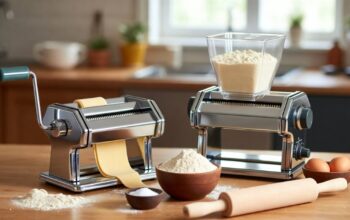
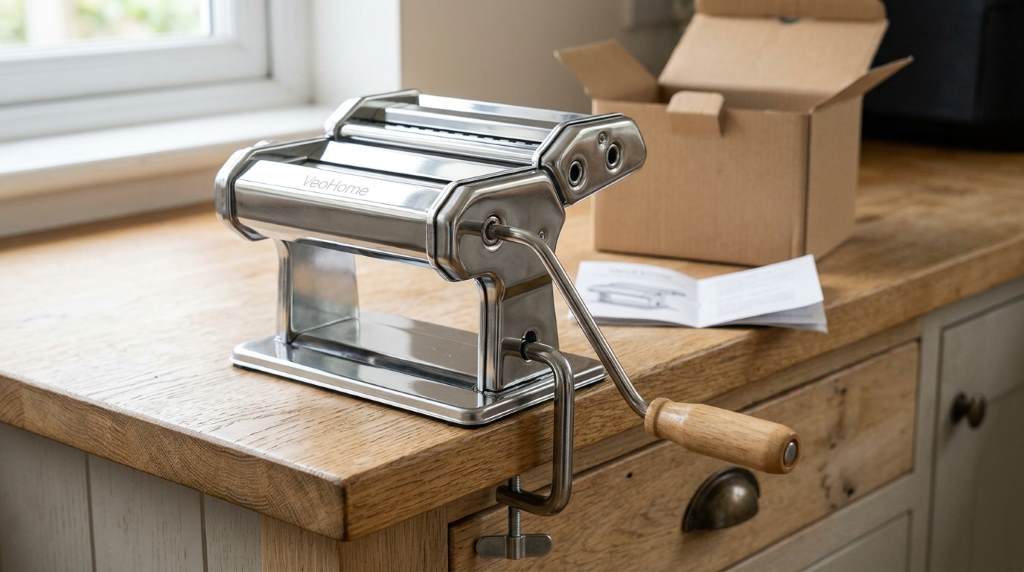
Yes, the VeoHome Manual Pasta Maker is a practical choice for making fresh pasta at home without electricity. Its seven thickness settings and included ravioli maker add useful flexibility for beginners. The machine currently carries 64 customer reviews on VeoHome, with strong overall feedback. A good pasta dough roller also matters because smooth sheets determine the final texture.
Key Takeaways Before You Buy
- Manual control: You roll and cut pasta without electricity or complicated controls.
- Seven thickness settings: You can adjust sheets for spaghetti, lasagna, fettuccine, or ravioli.
- Useful accessories: The kit includes a drying rack, ravioli maker, clamp, crank, and cleaning brush.
- Sturdy construction: Stainless steel gives the machine a solid feel for regular home preparation.
- Learning curve: Dough consistency matters more than machine settings during your first few batches.
- Cleaning requires care: The machine is not dishwasher safe, so manual cleaning remains necessary.
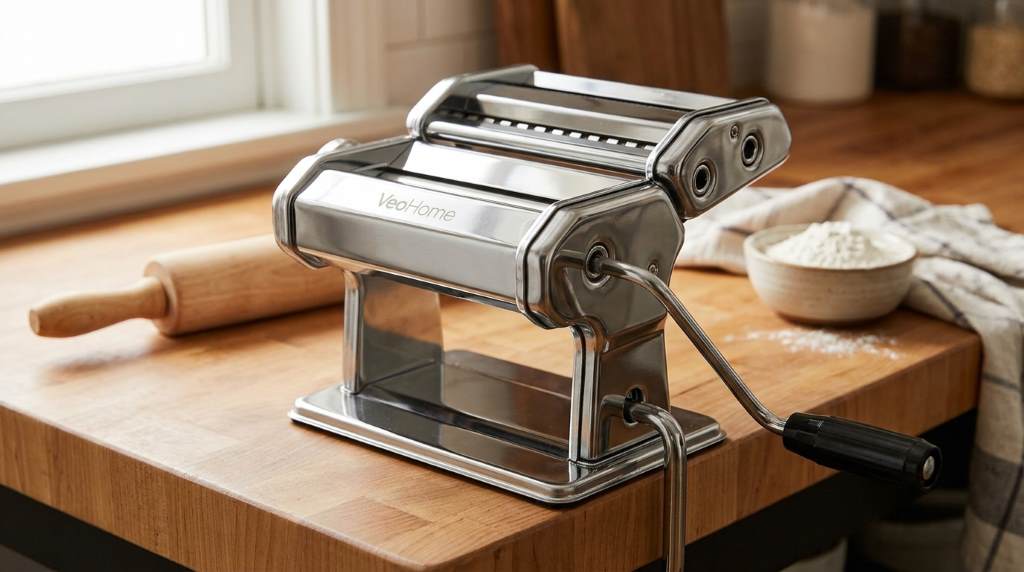
What Makes the VeoHome Manual Pasta Maker Different?
The VeoHome takes a traditional approach by keeping the pasta-making process entirely manual. You mix, knead, roll, adjust, cut, and dry the dough yourself. That approach gives you direct control over thickness and handling. It also keeps the machine independent from outlets, batteries, and electrical motors.
More importantly, the kit focuses on the complete pasta-making workflow rather than only rolling dough. You receive a pasta drying rack, ravioli maker, cleaning brush, hand crank, and table clamp. For home cooks comparing KitchenAid attachments, the VeoHome offers a simpler manual alternative.
The stainless-steel body also gives the machine a more substantial feel than lightweight plastic alternatives. At about 2.9 kilograms, it has enough weight to feel stable during normal countertop use. The supplied clamp further anchors the machine while you turn the crank.
Who Should Consider It?
This machine suits beginners who want hands-on control without investing in an electric pasta appliance. It also fits experienced cooks who enjoy preparing dough from scratch. However, frequent high-volume cooking may favor a powered machine with faster automated processing.
How the Seven Thickness Settings Work
The seven settings represent one of the VeoHome’s most useful features. You can gradually reduce dough thickness instead of forcing a thick piece through one aggressive pass. This gradual approach helps create smoother sheets with more consistent texture.
VeoHome recommends starting with the widest setting before progressively moving toward thinner settings. The manufacturer suggests setting seven for initial conditioning, then moving toward settings one through seven according to recipe needs. For reference, its instructions identify setting four for spaghetti and settings two or three for fettuccine or lasagna.
Ravioli requires thinner sheets because excessive dough can overpower the filling. Therefore, setting one can work well when you need delicate sheets for filled pasta. Still, dough hydration and flour choice can change the ideal setting.
Why Gradual Rolling Matters
Never rush directly from thick dough to an extremely thin setting. Instead, pass the dough through progressively narrower gaps. This method reduces tearing and helps the sheet develop a smoother, more uniform structure.
Also, avoid excessive flour between passes. Too much flour can dry the surface and make the finished pasta less cohesive. Use only enough flour to prevent sticking during rolling and cutting.
Setting Up the Machine for the First Batch
Start by placing the VeoHome on a clean, sturdy countertop. Next, secure its clamp firmly before inserting the hand crank into the roller mechanism. A stable setup makes the entire process easier, especially when handling long sheets.
Before preparing dough, wipe the machine and accessories with a dry cloth. VeoHome specifically advises against washing the machine with water. Instead, use the supplied brush and remove residual flour or dried dough after use.
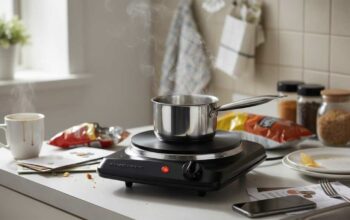
If you are also organizing a compact cooking station, consider how countertop appliances affect available workspace. A single burner hot plate can help separate pasta cooking from your main preparation area. This arrangement becomes particularly useful when several dishes need attention simultaneously.
Prepare the Dough Correctly
Begin with a firm dough rather than a soft, sticky mixture. Combine flour and eggs, then knead until the dough becomes smooth and elastic. Afterward, let the dough rest before you begin repeated rolling.
The resting stage gives the flour time to hydrate and the gluten structure time to relax. Consequently, the dough becomes easier to roll without constantly shrinking backward. If the dough feels sticky, add a small amount of flour rather than coating it heavily.
Rolling Fresh Pasta Without Tearing It
Divide the rested dough into manageable portions before feeding it through the rollers. Smaller pieces give you better control and reduce awkward handling around the machine. Flatten each portion slightly before inserting it into the widest setting.
Run the dough through the widest setting several times while folding it as instructed. Then gradually reduce the setting as the sheet becomes smoother. Keep your movements steady because inconsistent cranking can produce uneven thickness.
Support long sheets with your free hand as they emerge from the rollers. However, never pull aggressively because stretching can distort the pasta. Instead, let the rollers perform most of the work while you guide the sheet gently.
Prevent Common Dough Problems
Sticky dough usually indicates excessive moisture or insufficient flour during handling. Add flour sparingly and continue rolling until the surface becomes manageable. Conversely, cracking usually signals dough that has become too dry.
If the sheet sticks inside the rollers, stop turning immediately. Remove the dough carefully, dust it lightly, and check the roller setting. Continuing to crank through a serious sticking problem can create unnecessary frustration.
Cutting Spaghetti, Fettuccine, and Other Pasta
Once the sheet reaches your preferred thickness, move it toward the cutting section. The VeoHome provides two cutting options for producing different pasta widths. Choose the cutter according to the shape and sauce you plan to serve.
Keep the sheet lightly floured before cutting, especially when the kitchen feels humid. Then feed it smoothly through the cutter while turning the crank at a consistent pace. Immediately transfer the strands to the drying rack or another lightly floured surface.
Fresh pasta can dry faster than many beginners expect. Therefore, avoid leaving an uncut sheet exposed while preparing other ingredients. Cover it lightly with a clean damp towel when you need extra preparation time.
Match Pasta Shape With the Sauce
Thin spaghetti works well with lighter sauces that coat individual strands easily. Fettuccine provides more surface area for creamy, cheesy, or richer sauces. Meanwhile, lasagna sheets give layered dishes structure without requiring complicated shaping.
Ravioli creates another advantage because the included mold expands what you can prepare. You can fill the pasta with cheese, vegetables, meat, or other suitable ingredients. Just keep the filling controlled because excessive moisture can weaken the dough seal.
Using the Included Drying Rack and Ravioli Maker
The included drying rack is more than a decorative accessory. It gives freshly cut strands space to separate while reducing contact between individual pieces. Consequently, you can organize the pasta before dropping it into boiling water.
The ravioli maker also adds meaningful value because filled pasta requires precise shaping. Place the sheet over the mold, add an appropriate amount of filling, and seal carefully. Keep the edges clean because flour or filling residue can interfere with proper closure.
For cooks planning a coordinated kitchen workspace, equipment placement can affect the entire cooking routine. A Tuscan kitchen with hidden modern appliances can preserve a traditional visual style while keeping preparation practical. The same principle works in smaller kitchens through thoughtful countertop organization.
Cleaning and Storage: The Part You Should Not Ignore
Cleaning the VeoHome requires a gentler approach than cleaning many ordinary kitchen tools. The manufacturer states that the machine is not dishwasher safe and recommends manual care. Therefore, keep water away from the machine and focus on dry cleaning methods.
Use the included brush to remove flour and dough from rollers and cutters. Let stubborn residue dry enough to loosen naturally rather than forcing it into the mechanism. Regular cleaning prevents old dough from affecting later batches.
Storage also deserves attention because pasta machines contain moving parts and cutting mechanisms. Store the machine somewhere dry and protect the accessories from unnecessary impact. Keep the clamp, crank, brush, drying rack, and ravioli mold together whenever possible.
VeoHome Manual Pasta Maker: Strengths and Limitations
The VeoHome has several advantages that become apparent during repeated home use. Its manual design provides control, while the seven settings support multiple pasta styles. The included accessories also reduce the need for immediate additional purchases.
Recent customer feedback generally praises its ease of use, construction, and completeness. Several reviewers specifically mention the drying rack as useful, while others highlight the machine’s sturdy feel. One reviewer also reported an early handle issue, showing that individual hardware experiences can vary.
On the other hand, manual pasta making requires physical involvement. You must crank the machine, guide the dough, and manage sheets as they emerge. Therefore, people who prioritize speed may prefer an electric model.
The machine also demands careful cleaning because you cannot simply place it inside a dishwasher. That limitation matters if convenience ranks above hands-on cooking. Still, dry cleaning becomes straightforward once you establish a consistent routine.
Quick Pros and Cons
- Pros: Seven thickness settings, stainless-steel construction, manual control, drying rack, ravioli maker, clamp, and cleaning brush.
- Pros: No electricity means fewer components and greater flexibility around countertop placement.
- Pros: The kit supports several popular pasta styles without requiring many separate accessories.
- Cons: Manual cranking takes more effort than using an electric pasta machine.
- Cons: The machine requires careful dry cleaning and cannot go into the dishwasher.
- Cons: Beginners may need several attempts before mastering dough consistency and thickness.
How to Get Better Results on Your First Three Batches
Your first goal should involve consistency rather than culinary perfection. Use one reliable dough formula and avoid changing flour, hydration, and thickness simultaneously. That strategy makes it easier to identify what caused a problem.
For the first batch, concentrate on smooth sheets and simple cut pasta. Next, experiment with thinner settings once you understand how your dough behaves. Finally, try ravioli after you feel comfortable sealing and handling delicate sheets.
Keep notes about flour quantity, egg size, resting time, thickness, and cooking results. Small adjustments become easier when you can compare batches objectively. Over time, those notes become more useful than generic recipes because they reflect your kitchen conditions.
Is the VeoHome Manual Pasta Maker Worth Buying?
For most home cooks seeking affordable hands-on pasta making, the VeoHome deserves serious consideration. It combines useful thickness control with accessories that support rolling, cutting, drying, and ravioli preparation. Its limitations mainly involve manual effort and careful cleaning.
The strongest reason to choose it involves control rather than speed. You can adjust the dough gradually, observe its texture, and shape pasta according to each recipe. That process appeals to cooks who want fresh pasta to feel like part of cooking rather than another automated task.
However, buyers should choose based on cooking habits rather than accessory count alone. If you make occasional weekend pasta, the manual format makes plenty of sense. If you prepare large quantities frequently, consider whether manual cranking fits your routine.
Final Verdict: A Practical Manual Pasta Kit for Home Cooks
The VeoHome Manual Pasta Maker succeeds because it keeps fresh pasta simple without making the process feel limited. Seven thickness settings, two cutting options, a drying rack, and a ravioli maker create a versatile home setup. Its stainless-steel construction also supports the machine’s practical positioning.
Ultimately, the quality of your pasta depends on both the machine and your dough technique. Use a firm dough, roll gradually, flour lightly, and cut soon after reaching the desired thickness. With those habits, the VeoHome can turn homemade pasta into a repeatable kitchen routine.
If you want fresh pasta without relying on electricity, the VeoHome is worth adding to your shortlist. Check the included accessories, countertop space, cleaning requirements, and your expected cooking frequency before purchasing. Then start with a simple pasta recipe and build your technique from there.
Frequently Asked Questions
Is the VeoHome Manual Pasta Maker good for beginners?
Yes, its manual controls and seven thickness settings make it approachable for beginners willing to practice.
Can the VeoHome make ravioli?
Yes, the kit includes a ravioli maker designed for preparing filled pasta at home.
How many thickness settings does the VeoHome have?
The machine provides seven adjustable thickness settings for different pasta recipes.
Is the VeoHome dishwasher safe?
No, VeoHome recommends manual dry cleaning rather than placing the machine in a dishwasher.
Does the VeoHome Pasta Maker need electricity?
No, the machine operates manually through a hand crank and does not require electricity.