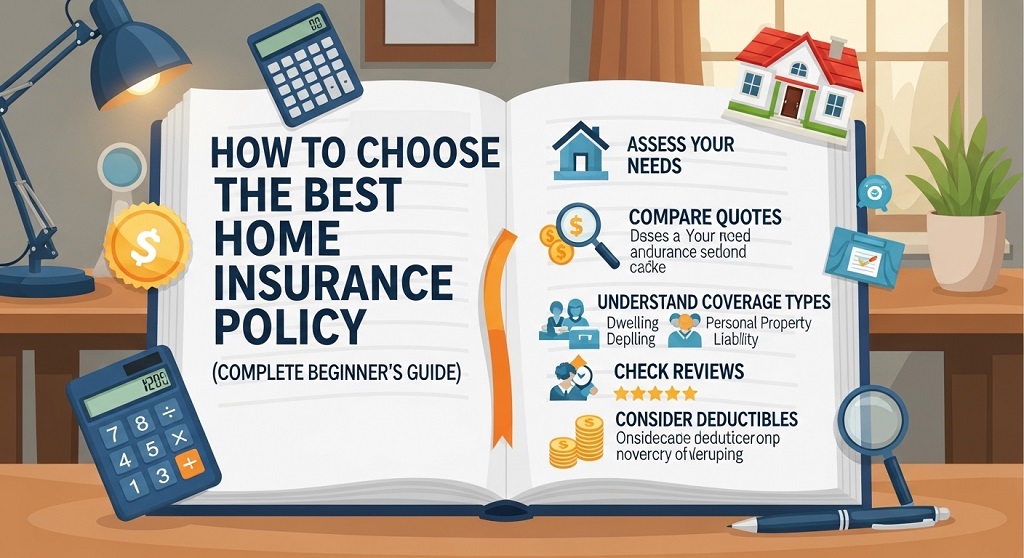
The best home insurance policy is one that fully covers your property replacement cost, protects against common local risks, includes liability coverage, and fits your budget without leaving coverage gaps.
Why Choosing the Right Home Insurance Policy Matters
Many homeowners only discover the limits of their insurance after a disaster happens. A storm damages the roof. A fire destroys furniture. A theft wipes out valuables. Then the claim arrives—and it’s not enough.
Home insurance is designed to protect your property, belongings, and financial stability from unexpected loss. But not every policy offers the same protection. Choosing the wrong coverage can leave homeowners underinsured by thousands of dollars.
A home insurance policy is a contract between you and an insurer that provides financial protection against damage, theft, liability claims, and certain natural disasters affecting your property.
This guide explains how to choose the right coverage, understand policy types, compare providers, and avoid costly mistakes. Whether you’re buying your first house or reviewing an existing policy, the goal is simple: protect your home properly without overpaying.

What Does Home Insurance Typically Cover?
Home insurance usually covers the building structure, personal belongings, liability risks, and temporary living expenses if your house becomes uninhabitable after a covered event.
A standard homeowners insurance policy generally includes four main protection areas:
- Dwelling coverage – protects walls, roof, floors, and built-in structures
- Personal property coverage – protects furniture, electronics, clothing, appliances
- Liability protection – covers injury claims from guests or accidents
- Additional living expenses (ALE) – pays temporary housing costs
Most policies also protect against:
- Fire damage
- Theft and burglary
- Lightning strikes
- Windstorms
- Explosions
- Vandalism
However, earthquakes and floods typically require separate policies.
How Much Home Insurance Coverage Do You Actually Need?
You need enough coverage to rebuild your home completely at current construction costs—not its market value.
Many homeowners confuse property price with rebuilding cost. Market value includes land value, but insurance covers structure replacement.
To estimate proper coverage:
- Calculate rebuilding cost per square foot
- Include labor and materials inflation
- Add interior fixtures and finishes
- Account for debris removal expenses
Insurance experts recommend reviewing replacement cost annually because construction prices change frequently.
What Is Replacement Cost vs Actual Cash Value in Home Insurance?
Replacement cost pays to rebuild damaged property at current prices, while actual cash value subtracts depreciation before reimbursement.
| Coverage Type | What It Pays | Best For |
|---|---|---|
| Replacement Cost | Full rebuild using current material prices | Most homeowners |
| Actual Cash Value | Reduced payment after depreciation | Budget policies only |
| Extended Replacement Cost | Extra coverage above limits during price spikes | High-risk locations |
| Guaranteed Replacement Cost | Unlimited rebuild coverage regardless of estimate | Premium protection |
Replacement cost coverage is usually the safest option because it protects against inflation-driven rebuilding expenses.
Which Types of Home Insurance Policies Are Available?
The most common home insurance policy types include HO-1 through HO-8, with HO-3 being the most widely recommended option.
Here’s how they differ:
- HO-1 – limited coverage (rare today)
- HO-2 – named-peril protection
- HO-3 – open-peril structure coverage (most popular)
- HO-4 – renters insurance
- HO-5 – comprehensive premium protection
- HO-6 – condo insurance
- HO-7 – mobile home coverage
- HO-8 – older property coverage
Most homeowners choose HO-3 because it balances affordability and protection.
How Do You Compare Home Insurance Providers Effectively?
Compare insurers based on financial strength, claim response time, customer satisfaction, coverage flexibility, and premium pricing.
According to industry reports from insurance rating agencies like AM Best, companies with strong financial ratings process claims more reliably during large disasters.
When evaluating providers, check:
- Claim settlement ratio
- Customer service reviews
- Coverage customization options
- Deductible flexibility
- Discount availability
A slightly higher premium often delivers significantly stronger protection.
What Deductible Should You Choose for Home Insurance?
A higher deductible lowers monthly premiums but increases out-of-pocket costs during claims.
Typical deductible ranges include:
- $500
- $1,000
- $2,500
- $5,000
If you maintain an emergency fund, choosing a higher deductible can reduce yearly insurance costs substantially.
Does Home Insurance Cover Natural Disasters?
Standard home insurance covers storms, fires, and lightning but usually excludes floods and earthquakes.
You may need separate protection if your area faces:
- Flood risk zones
- Seismic activity
- Coastal cyclones
- Landslides
Climate-related disasters are increasing globally. The World Meteorological Organization reports a fivefold rise in weather-related disasters over the past 50 years.
What Personal Belongings Should Be Specifically Insured?
High-value items like jewelry, artwork, electronics, and collectibles often require additional riders beyond standard policy limits.
Standard policies typically cap coverage for:
- Jewelry
- Cash
- Luxury watches
- Antiques
- Rare collectibles
Scheduled personal property endorsements ensure full-value reimbursement.
How Much Liability Coverage Should Homeowners Carry?
Most experts recommend at least $300,000 in liability coverage to protect against lawsuits and injury claims.
Liability protection covers situations such as:
- Guest injuries on your property
- Pet-related accidents
- Property damage caused to neighbors
- Legal defense costs
Higher-net-worth households often choose umbrella policies for extended protection.
How Can You Reduce Home Insurance Premiums Without Losing Coverage?
You can lower premiums by bundling policies, improving home security, increasing deductibles, and maintaining a claims-free record.
Common cost-saving strategies include:
- Installing smoke detectors
- Adding burglar alarms
- Using impact-resistant roofing
- Bundling home and auto insurance
- Improving credit score (in some regions)
Insurance Information Institute estimates bundling policies can reduce premiums by up to 25%.
How Often Should You Review Your Home Insurance Policy?
You should review your policy annually or after renovations, major purchases, or changes in property value.
Coverage updates are especially important after:
- Kitchen remodeling
- Room additions
- Installing solar panels
- Buying expensive electronics
- Home office upgrades
Failing to update coverage increases underinsurance risk.
What Mistakes Should Beginners Avoid When Choosing Home Insurance?
The most common mistakes include underinsuring property, ignoring exclusions, choosing lowest premiums blindly, and skipping liability coverage.
Avoid these errors:
- Insuring market value instead of rebuild cost
- Ignoring disaster-specific risks
- Overlooking deductible impact
- Skipping personal property riders
- Not comparing multiple insurers
Smart policy selection focuses on protection quality—not just price.
Conclusion: How Do You Select the Right Home Insurance Policy Confidently?
The best home insurance policy matches your property’s replacement value, protects against regional risks, includes liability coverage, and adapts as your home changes.
Choosing insurance is not just a financial decision—it’s a protection strategy. A strong policy ensures rebuilding support after disasters, safeguards belongings, and prevents lawsuits from becoming financial crises.
Review coverage annually. Compare insurers carefully. Understand exclusions before signing. Add riders when needed. These steps reduce long-term risk significantly.
If you haven’t reviewed your home insurance recently, now is the right time. A short comparison today can prevent major losses tomorrow.
Frequently Asked Questions About Choosing Home Insurance
Is home insurance legally required?
Home insurance is not legally mandatory in most countries, but mortgage lenders usually require it before approving loans.
How long does it take to activate a home insurance policy?
Most policies become active within 24 hours after approval and payment confirmation.
Does home insurance cover water damage?
It covers sudden internal leaks but usually excludes floodwater damage from external sources.
Can I switch home insurance providers anytime?
Yes, homeowners can switch insurers anytime, though cancellation fees may apply depending on policy terms.
What affects home insurance premium pricing the most?
Location risk, property age, construction type, claim history, and security features strongly influence premium costs.
Do home-based businesses require additional insurance?
Yes, standard policies rarely cover business equipment or liability, so endorsements or separate policies are necessary.
Should landlords use standard home insurance policies?
No, rental property owners need landlord insurance designed for tenant-related risks.
Read More Also: How to Find an Affordable Stair Vacuum Cleaner
Discover More: How to Use Painter’s Tape Like a Pro for Clean Paint Jobs