
Painting, cabinet refacing, and flooring guides save you the most money. These projects need basic tools, not specialized skills. You can often cut costs by 50% to 80% compared to hiring a pro.
Not every DIY guide delivers real savings, though. Some projects look easy in a video but hide costly mistakes. This guide breaks down which renovation tasks are truly worth doing yourself, and which ones you should leave to the experts.
We’ll compare real cost ranges, common pitfalls, and the skill level each project needs. By the end, you’ll know exactly where to focus your time and tools.
What Makes a DIY Renovation Guide Worth Following
A good DIY guide saves you money without risking your home’s safety or resale value. It teaches you a skill, not just a shortcut.
Look for guides that explain the “why” behind each step, not just the “how.” A guide that only shows you how to swap a faucet, without explaining water shut-off valves or leak testing, sets you up for costly mistakes.
The best guides also list a realistic materials cost. If a guide promises a full kitchen remodel for under $500, treat it with caution. According to industry experts, most legitimate cost savings come from labor, not materials. You’re paying yourself instead of a contractor, and materials cost roughly the same either way.
Signs a Guide Is Trustworthy
- It lists specific tools and their approximate prices.
- It shows before-and-after photos from real projects, not stock images.
- It mentions permits or code requirements when relevant.
- It includes a realistic time estimate, not just “one weekend.”
Painting and Wall Refresh Guides Offer the Highest ROI
Professional painters typically charge $2 to $6 per square foot in labor fees alone, whereas tackling the project yourself limits your expense strictly to high-quality paint, primer, and essential supplies. By taking the DIY approach, transforming a single room requires roughly $50 to $150 in materials a stark contrast to the $300 to $800 price tag of hiring a contractor. Taking on this manageable weekend effort yields immediate, dramatic visual returns while saving you hundreds of dollars in labor costs, making a wall refresh one of the smartest budget upgrades available. If you want to continue upgrading your house on a budget, check out these home improvement tips that transform spaces fast to maximize your impact with minimal effort.
What to Watch Out For
Bad prep work ruins even good paint. Skipping primer, sanding, or patching holes leads to peeling and uneven color. Spend extra time on prep, and the paint job will last for years instead of months.
Also budget for painter’s tape, drop cloths, and quality brushes. Cheap tools often waste paint and create messy lines, which can eat into your savings.
Kitchen Cabinet Refacing Guides Cut Costs Without a Full Remodel
Cabinet refacing gives your kitchen a new look without the price tag of new cabinets. Full cabinet replacement often costs $12,000 to $25,000. Refacing, or simply repainting and swapping hardware, can cost under $1,000 when done yourself.
This project works well because cabinet boxes are usually still in good shape. You’re changing the surface, not the structure. New paint, new hardware, and sometimes new cabinet doors give the whole kitchen a fresh feel.
Steps That Matter Most
- Remove all doors and hardware first, and label them.
- Clean and sand every surface before painting.
- Use a bonding primer made for cabinets, not wall paint.
- Apply thin coats and let each one dry fully.
Skipping the sanding step is the most common mistake. Paint won’t stick well to glossy factory finishes without it, and chipping will follow within months.
Flooring Installation Guides That Skip Contractor Fees
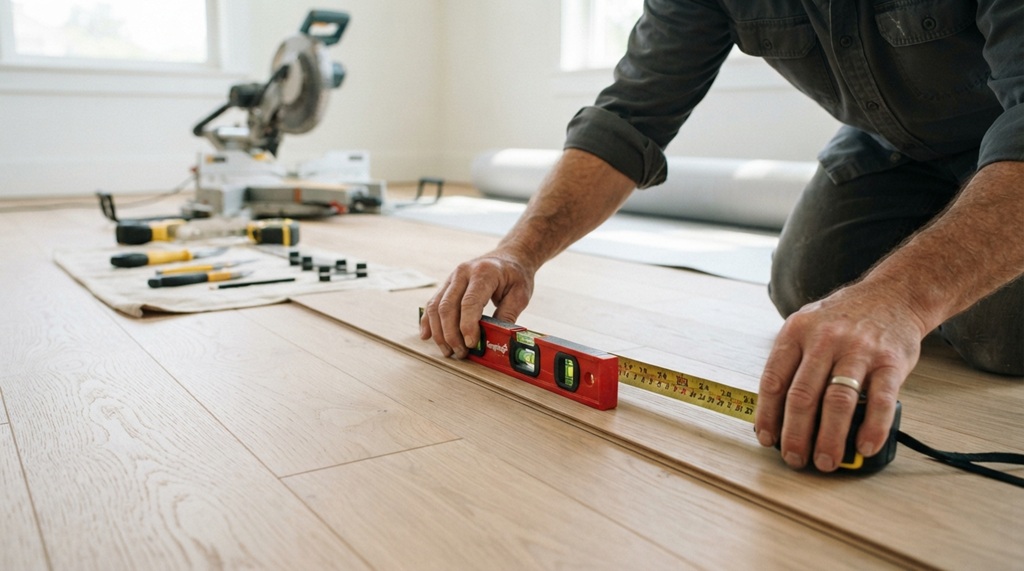
Certain flooring types are genuinely DIY-friendly and can save you thousands. Click-lock laminate and luxury vinyl plank flooring don’t need glue, nails, or special tools. They snap together, similar to puzzle pieces.
Professional flooring installation often adds $3 to $8 per square foot in labor costs. For a 300-square-foot room, that’s $900 to $2,400 in labor alone. Installing click-lock flooring yourself removes that cost entirely, leaving you with just the price of materials.
Which Flooring Types to Avoid as a Beginner
Tile and hardwood require more skill and specialized tools. Tile needs precise cutting and proper spacing, or grout lines will look uneven. Solid hardwood requires acclimation time and careful nailing to avoid gaps. Beginners often start with laminate or vinyl plank first, then move to harder materials once they’ve built confidence.
Bathroom Fixture Upgrade Guides for Small Budgets
Swapping fixtures, not full plumbing, is where DIY bathroom guides save the most. Replacing a faucet, showerhead, or toilet seat rarely requires a licensed plumber, and the parts themselves are inexpensive.
A new faucet typically costs $50 to $200 for the part itself. Hiring a plumber to install it can add another $150 to $300. For simple swaps like this, doing it yourself often cuts the total cost in half or more.
When to Call a Professional Instead
Any project that involves moving pipes, altering drainage, or working behind walls carries real risk. A mistake here can lead to water damage, which costs far more to fix than the labor you saved. If your project involves cutting into a wall or changing a pipe’s location, hiring a licensed plumber protects both your home and your budget.
Landscaping and Curb Appeal Guides That Pay Off Fast
Landscaping is one of the most beginner-friendly renovation categories, and it also boosts resale value. According to industry experts, well-maintained landscaping can meaningfully increase a home’s curb appeal and perceived value at resale.
Mulching, edging garden beds, and planting shrubs cost far less than hiring a landscaping company. A weekend of DIY yard work might cost $100 to $300 in materials, compared to $1,000 or more for a professional crew to do the same tasks.
A Tip Most Guides Skip
Most guides tell you which plants to buy, but few mention soil testing first. A simple soil pH test costs under $15 and tells you whether your soil needs amendments before you plant anything. Skipping this step is why many DIY landscaping projects fail within the first year — the plants simply weren’t suited to the existing soil.
How to Tell a Trustworthy DIY Guide From a Risky One
Not all “money-saving” guides actually save money once you factor in mistakes, redos, and safety risks. A trustworthy guide is honest about its limits.
Watch for guides that skip safety warnings around electrical work, gas lines, or structural changes. These are areas where a mistake can cost far more than a contractor’s fee would have, both in repairs and in potential injury.
A reliable guide also tells you when to stop and call a professional. If a source claims every renovation is 100% DIY-friendly, that’s a red flag. The most useful guides are honest about which projects fit a beginner’s skill level and which ones don’t.
Frequently Asked Questions
What is the easiest DIY renovation that saves the most money?
Painting is generally the easiest and highest-value DIY renovation. It requires minimal tools, has a short learning curve, and can save hundreds of dollars per room compared to hiring a painter.
Are DIY renovation guides accurate about cost savings?
Many are accurate for materials-only projects like painting or fixture swaps, but some understate the cost of tools, mistakes, and redo work. Always add a buffer of 10% to 20% to any estimated budget you find online.
Which renovations should I avoid doing myself?
Avoid DIY for anything involving gas lines, electrical panel work, or structural changes like removing load-bearing walls. These require licensed professionals for both safety and, often, legal code compliance.
How much can I realistically save by doing renovations myself?
Savings vary by project, but many homeowners save 50% to 80% on labor costs for simpler projects like painting, cabinet refacing, or basic flooring. Complex projects like plumbing or electrical work offer smaller relative savings once safety and tool costs are factored in.
Do I need special tools to start DIY renovation projects?
Most beginner-friendly projects, like painting or click-lock flooring, need only basic tools you may already own, such as a utility knife, tape measure, and a few hand tools. More advanced projects may require a one-time tool rental, which is still usually cheaper than hiring labor.
Conclusion
Painting, cabinet refacing, flooring, and simple fixture swaps offer the best return for DIY effort. They need modest skill, low tool investment, and they consistently beat contractor pricing. Projects involving plumbing relocation, electrical panels, or structural changes are where DIY savings disappear fast, often replaced by expensive repairs.
Choose your next project based on your actual skill level, not just the promised savings. Start with a small, low-risk task like painting a single room. Once you’ve built confidence, you can move on to bigger projects that save even more.